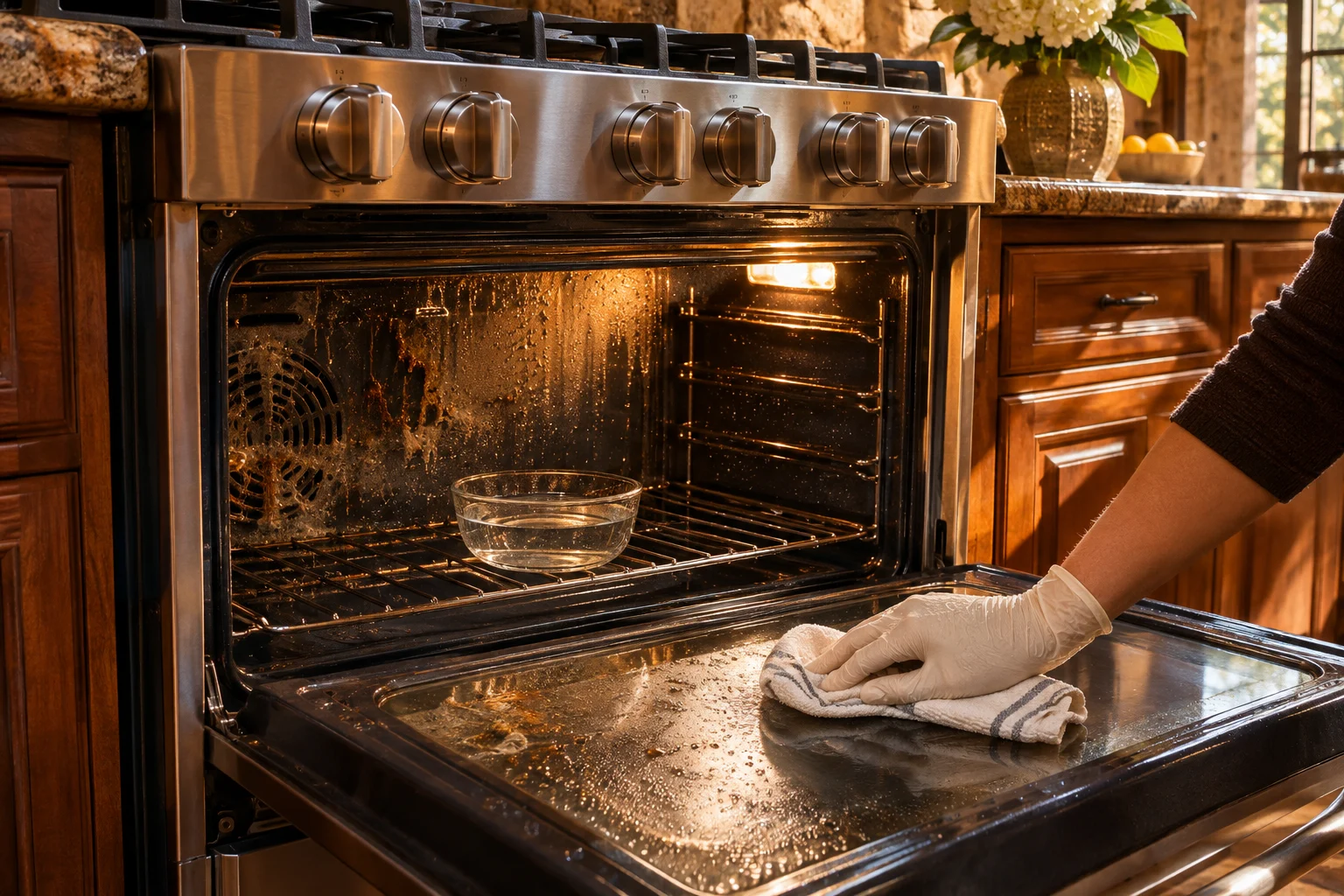
Steam-style cleaning uses moisture to soften lighter soil, while high-heat self-cleaning breaks down residue through a hotter controlled cycle. A Viking range should use only the cleaning method it actually supports. Start by identifying the available cycle and removing loose spills after cooling; never add water or select a cleaning mode based on another oven’s procedure.
Choose cycles from the operating instructions
A function name describes a designed program with its own preparation, loading restrictions, and completion process. The owner manual establishes whether steam cleaning, self-cleaning, or a hand-cleaning method belongs to the installed range. The control sequence and required water quantity, if any, must come from that source.
General cleaning principles help explain the difference without replacing those instructions. Moisture can loosen fresh light residue for wiping after cooling. A high-heat cleaning process treats heavier baked-on material through controlled heating, with protective systems managing the door and temperature.
For the RVER3301 range, identify its actual control arrangement and cleaning instructions before selecting a cycle. Its documented cooking features include Vari-Speed Dual Flow convection with two fan speeds and reversible rotation. A convection fan feature does not establish a steam-cleaning function.
Prepare the cavity instead of relying on heat alone
Loose food and pooled grease should be addressed through the permitted method before a cleaning cycle. Heavy residue can smoke as it heats. Let the cavity cool fully, remove accessible loose debris, and follow the instructions for racks, probes, cookware, and other accessories.
Some materials and finishes need specific care, so leave parts in or remove them only as directed. An accessory suited to ordinary cooking is not automatically suited to a cleaning cycle. Keep cleaning chemicals out unless the instructions explicitly permit them for that method.
- Confirm the supported cleaning function before starting.
- Allow the cavity and removable accessories to cool.
- Remove loose spills using the permitted approach.
- Prepare racks and other items through the appliance instructions.
- Keep the surrounding ventilation route clear.
Plan to monitor the appliance’s ordinary indications during cleaning. Keep household members clear of hot surfaces and leave space around the range. A persistent abnormal smell, sparking, or smoke that suggests a problem calls for stopping through the safe procedure and arranging help.
How the methods differ in practical use
| Method where supported | What it does | What still needs attention |
|---|---|---|
| Steam-style cleaning | Uses moisture to soften suitable surface soil | Permitted water amount, preparation, and wiping after cooling |
| High-heat self-cleaning | Uses a controlled hot cycle to break down residue | Accessory preparation, ventilation, door protection, and cooling |
| Approved hand cleaning | Removes accessible soil directly | Correct cleaner and protection of seals and openings |
Choose the method appropriate to the supported function and soil condition. Repeating an unsupported process can damage a finish or leave liquid where it does not belong. A cooler cleaning approach may also need more direct wiping; its result should be judged by its intended purpose.
Door locks protect a hot cleaning cavity
A self-clean door lock secures the cavity while its conditions require protection. Let the oven complete its intended cooling and release behavior. Avoid pulling on the handle or inserting a tool to release a lock manually.
F01 means the latch is outside its required position for cooking or cleaning. It is a critical fault that cancels the current cycle and turns off all elements. The technical instructions call for turning the cycle off, powering down, and correcting the lock issue.
A door-related fault can involve position sensing or mechanism operation, so a technician checks more than whether the handle moves. The latch and its protective response need to work correctly after repair. Leave internal locks and wiring in place during owner checks.
Temperature sensing and cooling matter during cleaning
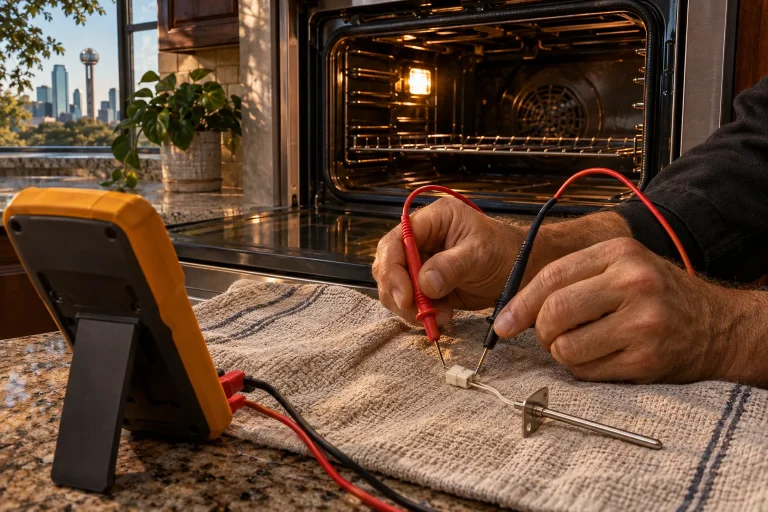
The oven temperature sensor supplies feedback to the control. F02 identifies an open or shorted RTD circuit, canceling cooking and cleaning and leaving the control inoperable. Its range light pattern is a single Cycle flash with the Clean light off.
The cooling fan protects components and surrounding areas while heat is managed. F03 means its Hall-effect feedback is outside what the control expects. Bake or clean is canceled, with the Clean light on and the Cycle light flashing 3 times. Turn the cycle off and power down for correction of the fan problem.
Internal sensor, fan, and control repairs require safe access and the correct circuit information. An oven that overheats or repeatedly cancels cleaning with a fault needs diagnosis before another cleaning run. Leave all protective covers and safety devices intact.
Finish cleaning only after safe cooling
Wait for the normal release and cooling indications before wiping the cavity. Use a soft tool or cloth appropriate to the finish and keep water away from electrical openings. Treat the gasket through its own care instructions, because harsh scrubbing or saturation can damage its sealing material.
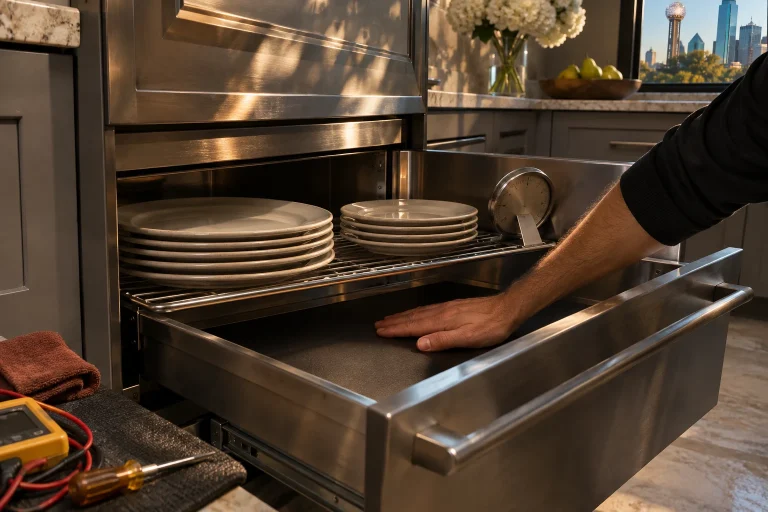
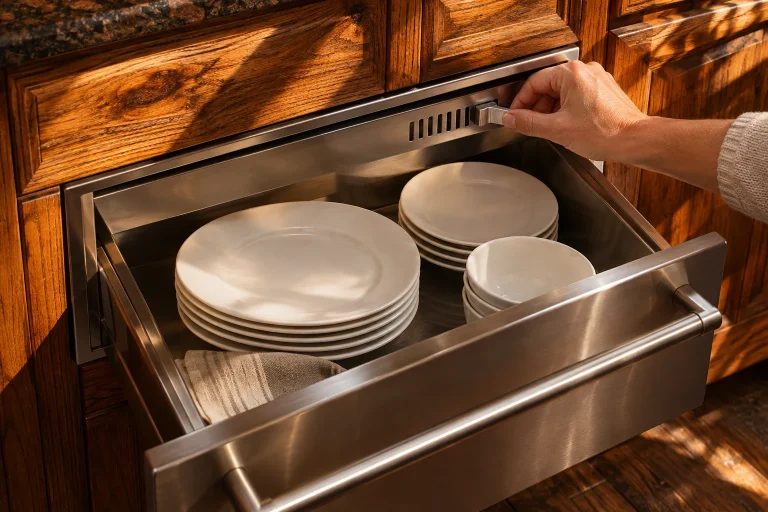
The TVDR361 has a stainless-steel oven cavity and a soft-close storage drawer. Material and accessory differences are another reason to use the actual range instructions. Keep cleaning products appropriate to the surface being treated.
Cleaning-cycle service in Dallas
For recurring cleaning faults in Dallas–Fort Worth, request Viking range repair. Note the model, selected cleaning method, preparation, fault display or light pattern, and door behavior together. Clear the approach and explain whether the cavity has cooled. The technician can then evaluate the latch, temperature feedback, cooling, and controls before proposing work.
Questions
What does F01 mean during cleaning?
The door lock has not reached its required position. It is a critical fault that cancels the cycle and turns off the elements.
What is F02?
The oven RTD temperature-sensor circuit is open or shorted. Cooking and cleaning are canceled and the control becomes inoperable.
What does F03 identify?
The control is not receiving the expected cooling-fan Hall-effect signal. It cancels bake or clean and needs fan-system diagnosis.