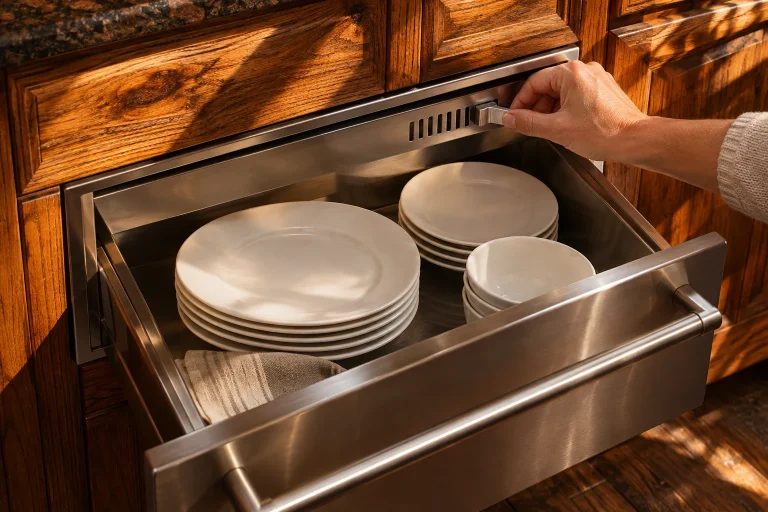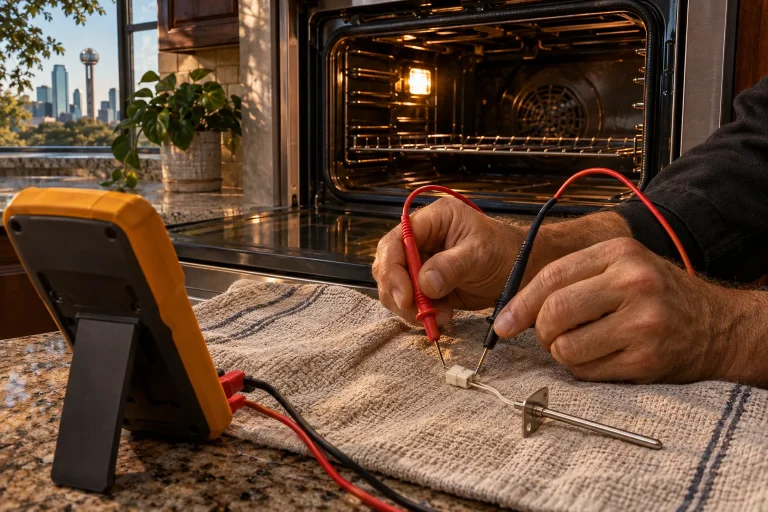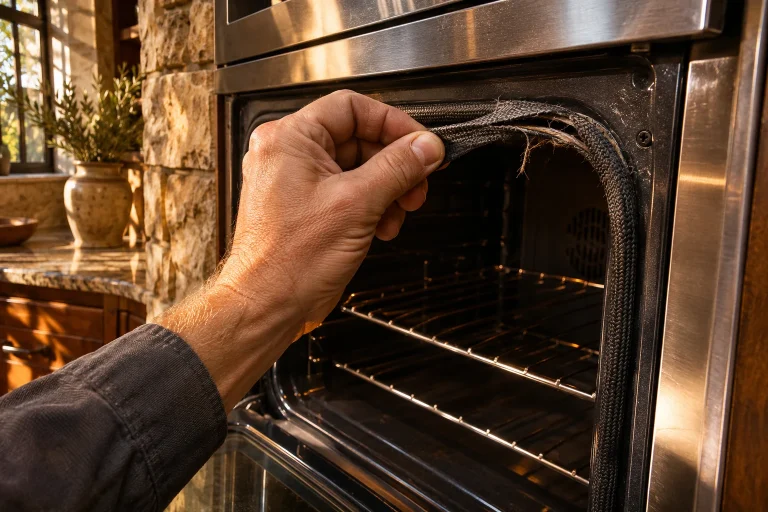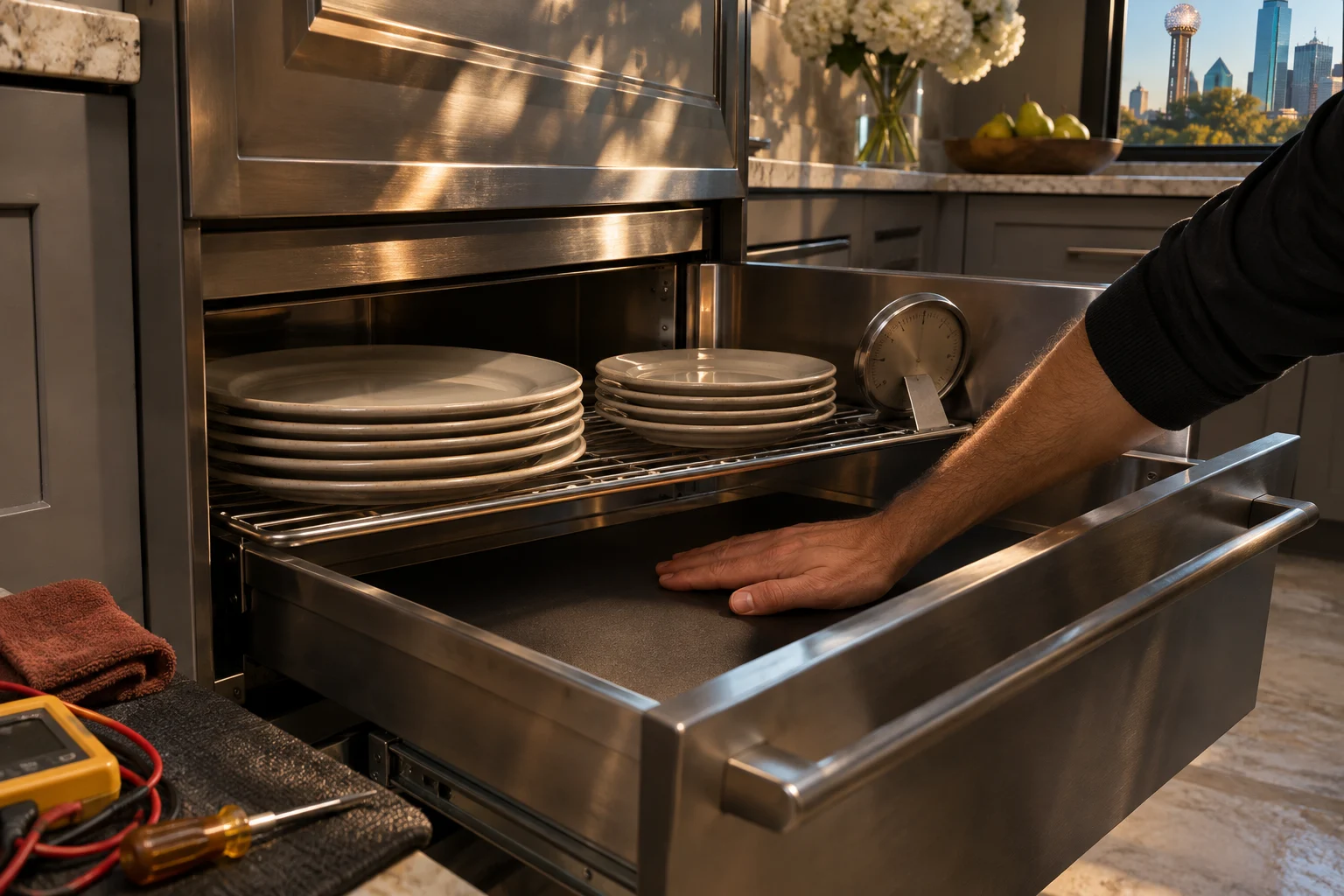
A Viking warming drawer that stays cool can have an inactive heat setting, interrupted supply, poor closure, or a failed element, sensor, or control circuit. Start with the ordinary controls and check that the drawer closes fully around a suitable load. Keep moisture choices distinct from heating selection. If normal setup leaves no useful warmth, arrange service instead of opening the liner or repeatedly restarting the appliance.
Confirm that heating has actually been selected
A drawer can appear ready while its heat control is still off or set for a different purpose. Read the active selection and use the intended operating method. The owner manual identifies the available functions and what each control changes.
A timer or other operating selection, where fitted, can also affect whether heating continues. Check its state before interpreting a stopped cycle as a failed heater. Avoid trying unfamiliar button combinations that can change settings without clarifying the original problem.
Use the appliance identification when finding the procedure. The Viking VEWD103 has its own installation and power information. Similar dimensions or a familiar front panel leave the actual control sequence to be confirmed for the drawer.
Moisture settings serve a different task
The Viking VQEWD5301 offers moist and crisp choices. Those controls help manage moisture around held food. A texture setting should not be treated as a direct measurement of food temperature or proof that the heater is working.
A covered pan retains steam differently from an uncovered one. Food can therefore look moist even when its storage temperature is unsuitable, or dry while the drawer heats normally. Follow appropriate food-safety practices and the appliance’s intended holding use.
Use the approved pans, lids, and racks in their described arrangement. Add water only where the actual procedure requires it. Liquid poured into an unintended area can reach electrical components or damage the drawer.
Check closure and the load
A protruding handle, misplaced rack, or tall container can stop the drawer before it seats. Heat then escapes from the intended space. Remove loose obstructions with the appliance off and cool and check whether closure becomes normal.
Keep the load within the arrangement described for the function. Heavy cool containers absorb heat and change the initial result. A drawer prepared for holding warm food should not be expected to perform an unspecified cooking or reheating task.
A front that sits unevenly, a slide that catches, or a drawer that requires force needs assessment. Leave rails and mounting in place. Avoid leaning or sitting on an open drawer, particularly when it contains heavy dishes.
| Observation | Possible area | Safe starting check |
|---|---|---|
| No visible normal control response | Setting, supply, or shared control | Read controls and inspect safe visible supply conditions |
| Controls respond but heat stays absent | Element, sensor, switching circuit, or connection | Arrange electrical diagnosis |
| Warmth is weak with a crowded load | Loading, starting conditions, or heat loss | Use the intended arrangement and check closure |
| Drawer does not close fully | Container obstruction or alignment | Clear loose items and leave damage for service |
| Breaker trips during heating | Supply or appliance fault | Stop use and seek assessment |
Supply checks should stay external
A plug must be connected through the installation intended for the appliance. Inspect only safe visible conditions, keeping away from a hot, wet, or damaged connection. Built-in access can be concealed, so leave trim and wiring enclosures closed.
The VQEWD5301 specifies a dedicated outdoor GFI-protected outlet. A protective device responding to a fault needs the cause assessed. Repeated resets are unsuitable when the circuit trips again or the appliance shows electrical symptoms.
Recent installation, a move, or electrical work is useful history if the heating problem began afterward. Have the installer or electrician compare the supply and connection with the appliance requirements. A control indicator alone leaves the heating circuit to be checked.
The element needs a controlled circuit
An electric element converts electricity into heat when the controls call for it. A failed element, damaged connection, sensor problem, or switching fault can interrupt heating. The same cool result can therefore involve different components.
The Viking VQEWD5421 has a concealed heating element. Leave its liner and service covers installed. A hidden element cannot be assessed reliably by the feel of the drawer front or an attempt to look through an opening.
A technician can isolate the supply, test the element and wiring, and compare the sensor signal with the control response. That sequence helps distinguish a failed heat source from a circuit that never commands it. Parts should follow the diagnosis and actual appliance identity.
Use a clear owner-check sequence
- Confirm the selected heating function and ordinary control state.
- Check safe visible supply conditions without opening wiring.
- Clear the closing path and use suitable containers.
- Follow the intended preparation and holding method.
- Arrange service when heat remains absent or unreliable.
Use an appropriate food thermometer and safe food-handling practices when assessing held food. Touch and visible steam are poor substitutes for a suitable measurement. Protect or discard food according to its actual storage history when the drawer has failed to hold it safely.
Stop for electrical or mechanical hazards
Smoke, sparks, burning odor, repeated breaker trips, or water near electrical parts means leave the drawer off. Have an unsafe supply point made safe before approaching it. Keep internal wiring tests and protective devices in professional hands.
A damaged slide or loose mounting also needs correction before a loaded drawer is used again. The model hub and error-code hub provide navigation when gathering appliance information.
Viking warming drawer help in Dallas
Keep one record: model, selected function, load and container arrangement, closure behavior, supply interruption, heating result, and checks completed. Use Viking warming drawer repair or contact in Dallas–Fort Worth. Explain whether controls are inactive or heating alone is missing so service can focus on the right circuit.
Questions
What should I check before suspecting the element?
Confirm the normal heating selection, supply condition, drawer closure, and intended loading. A continuing lack of heat needs assessment.
Does a moist setting increase the temperature?
Moisture controls affect retained steam and texture. Heating selection and food temperature need to be assessed separately.
Can I remove the liner to inspect a hidden element?
Keep internal covers installed. A technician should isolate power and test the element and controls with proper access.
What if the breaker trips when heating starts?
Leave the drawer off and arrange assessment of the appliance and supply. Repeated resets can energize an unresolved electrical fault.