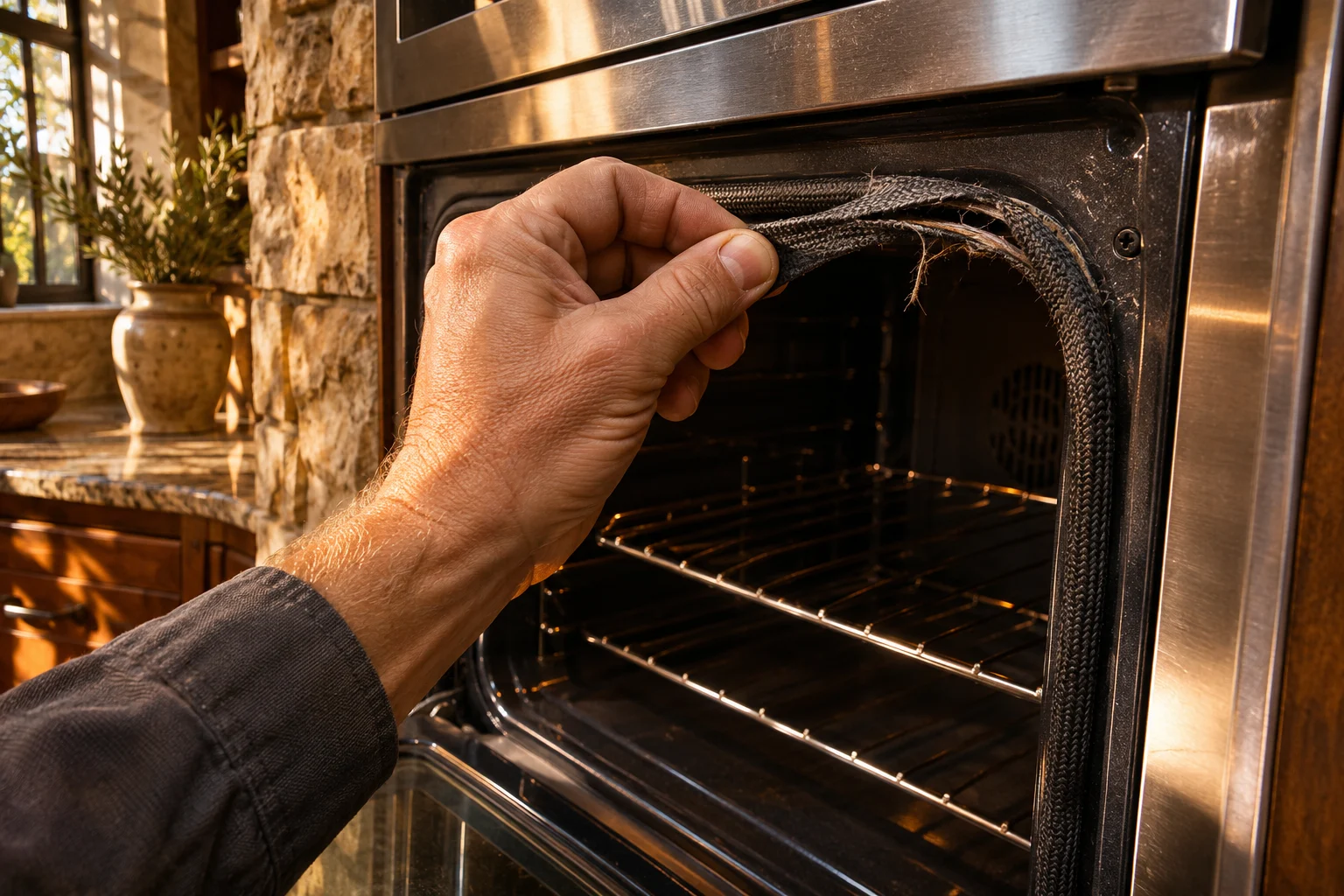
A Viking wall-oven gasket may need replacement when it is torn, badly frayed, flattened, or loose enough to leave uneven contact around the door. Heat loss at a damaged section can affect cooking and warm nearby surfaces. Start with the oven off and fully cool, inspect the seal’s condition, and check whether a rack, hinge, or door-alignment problem is preventing normal closure.
What the gasket is supposed to do
The gasket limits unwanted heat escape where the door meets the oven opening. Its material must tolerate the cooking environment while allowing the door to close as designed. A worn section can create a local path for hot air and change how evenly the cavity holds heat.
Ovens also have intended ventilation routes. A joint or opening in a gasket can be part of that design, so compare the shape with the owner manual or correct replacement layout. Adding sealant or stuffing material into an intended gap can interfere with normal operation.
A warm door edge alone is a poor reason to order a gasket. Inspect visible damage and the closure pattern together. Heat is produced inside the appliance, and the door’s construction, cooling, and surrounding ventilation all influence exterior warmth.
Look for damage after the cavity cools
Examine the gasket along its accessible length without pulling it away from the mounting. Look for a torn section, heavy fraying, missing support, or an area that has become hard and misshapen. A seal hanging loose may have lost a clip or been damaged during cleaning.
Keep the material intact while inspecting. Aggressive scrubbing can damage woven gasket fibers, and strong chemicals can affect its condition. Clean only as the care instructions allow. Avoid soaking a seal or coating it with oil to make it look restored.
- Check for tears and missing sections.
- Look for loose mounting points.
- Compare contact around the door without forcing closure.
- Keep racks and cookware clear of the door path.
- Leave intended gasket joints and vents unchanged.
If food residue is on the cabinet face where the seal rests, clean that surface gently using suitable materials. A sound gasket cannot make even contact over a hard deposit. Let the area dry before assessing closure again.
Check hinges and obstructions before choosing a seal
A pan handle or projecting rack can stop the door before the gasket reaches its contact surface. Remove the obstruction and close the door gently. If the gap remains wider on one side or the door needs lifting, alignment or hinge wear may be involved.
A new gasket cannot straighten a bent door or repair a damaged hinge mount. The technician should assess those parts together. Avoid leaning on an open oven door or using it to support cookware while arranging service.
Double ovens deserve a cavity-specific description. The VGDO271 is a gas double wall oven, while MVDOE6301SS is an electric double-oven configuration. Identify the affected upper or lower door and keep replacement selection tied to the full model.
| Finding | Likely area to assess | Next step |
|---|---|---|
| Torn or loose gasket section | Seal and mounting | Arrange the correct replacement or mounting repair |
| Door gap wider on one side | Hinges or alignment | Inspect support before replacing the seal |
| Door stops against a rack | Loading obstruction | Seat the rack and check closure gently |
| Heat loss continues with sound contact | Heating, sensing, or airflow | Request broader diagnosis |
| Door stays locked abnormally | Latch and lock detection | Leave the mechanism unforced for service |
Heat loss changes cooking, but so do other faults
A leaking door can make the control work harder to maintain conditions and can contribute to uneven browning or longer cooking. Frequent door opening creates another heat-loss path, so compare results during ordinary closed-door cooking. Use consistent cookware and the intended rack position when assessing a change.
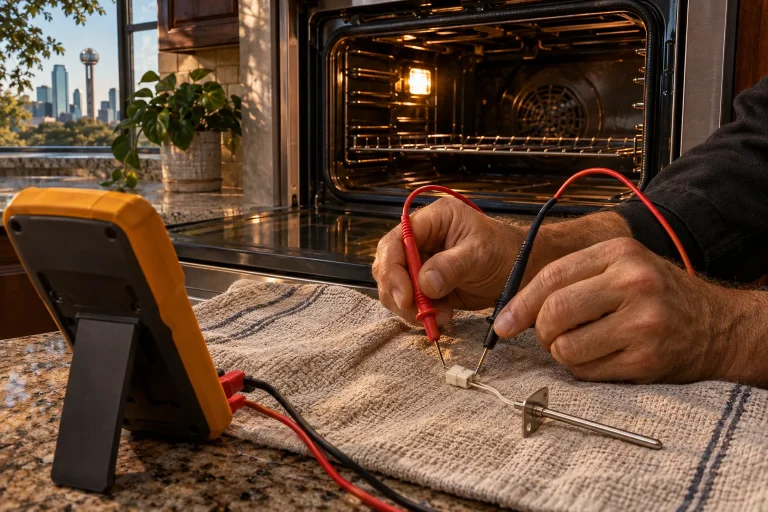
A failed heating component or inaccurate sensor can produce similar complaints. The control depends on temperature feedback to cycle heat. A technician can compare actual temperatures, sensor behavior, and heating output while also inspecting the door seal.
F2 identifies oven overtemperature, with the sensor, wiring, and temperature limiter among the checks. Excessive heat needs priority over routine gasket maintenance. Stop the oven for uncontrolled heating, smoke, or an electrical odor and isolate power safely when necessary.
Replacement needs the correct material and fit
Use a gasket designed for the oven and cavity. Length, profile, mounting, and intended openings all matter. A generic strip can prevent proper closure or fail under heat. Keep the original arrangement clear before removal and use the replacement procedure specified for the appliance.
Some designs permit straightforward gasket access; others require door work. Heavy doors, glass panels, and hinge springs need careful handling. Use a technician when replacement involves disassembly or when mounting damage is present. Leave household adhesive and improvised clips out of the repair.
After repair, the door should close normally without slamming. The seal should follow its intended path and the surrounding ventilation should remain open. Avoid using a self-clean cycle as the first test of an uncertain installation.
Lock faults need their own diagnosis
F9 concerns lock sensing that reports the door unlocked. FF concerns lock sensing that reports it locked. Viking’s diagnostic areas include latch switches, the motor, plunger switch, and wiring. Those faults are distinct from visible gasket wear.
Leave a locked door unforced after allowing normal cooling and following the operating instructions. A technician can determine whether a latch assembly or related circuit has failed. Keep all door safety components intact.
Viking wall-oven help in Dallas
For a Dallas–Fort Worth request, gather the model, affected cavity, damaged gasket location, door-gap pattern, cooking change, and any code. Send that description through the contact form.
Owners can inspect cooled accessible seals and clear loading obstructions. Use Viking wall-oven repair for gasket replacement requiring door work, hinge trouble, persistent heat loss, or a lock fault.
Questions
Should every gap in an oven gasket be closed?
Some gasket layouts include an intentional opening or joint. Follow the oven's original design and leave intended ventilation paths unchanged.
What does Viking F2 concern?
F2 identifies oven overtemperature. The sensor, its wiring, and the temperature limiter are technical diagnostic areas.
Can a door-lock code involve more than the gasket?
Yes. F9 and FF concern door-lock sensing, with the latch, motor, switches, and wiring among the areas to inspect. A new gasket alone may leave that fault unresolved.