A Viking range oven that stays below its target can have a weak bake element or gas ignition system, a temperature-sensor fault, a supply problem, or heat escaping through poor door closure. Start by confirming the cooking mode and target, keeping the door closed, and reading any fault indication. An oven that warms partly but stalls still needs its heat source and sensing checked. Leave internal electrical and gas tests to a technician.
Compare the same mode and starting conditions
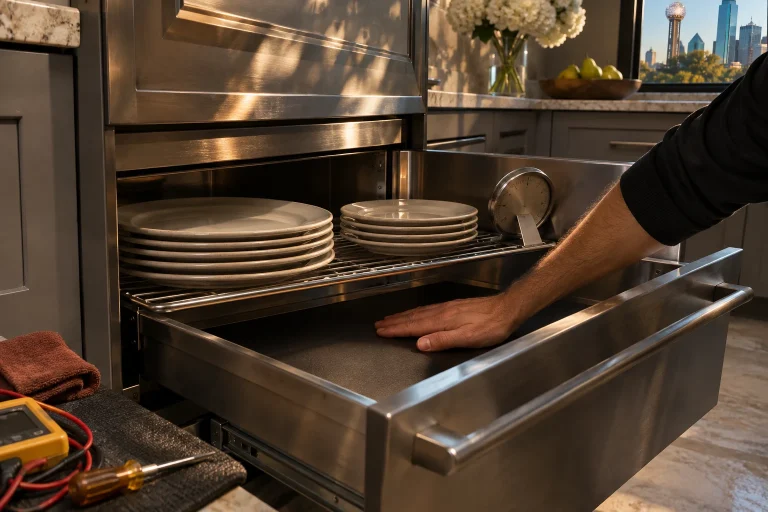
A different target or cooking mode changes how the oven heats. A cold cavity and one still warm from earlier use also start from different conditions. Compare like settings before deciding performance has changed, and remove unnecessary stored cookware that absorbs heat.
Keep the door closed during preheating where possible. Each opening releases hot air and affects the temperature you are trying to judge. Use the window and display instead of repeatedly opening to feel for warmth. Skin sensation is unsuitable for measuring oven temperature.
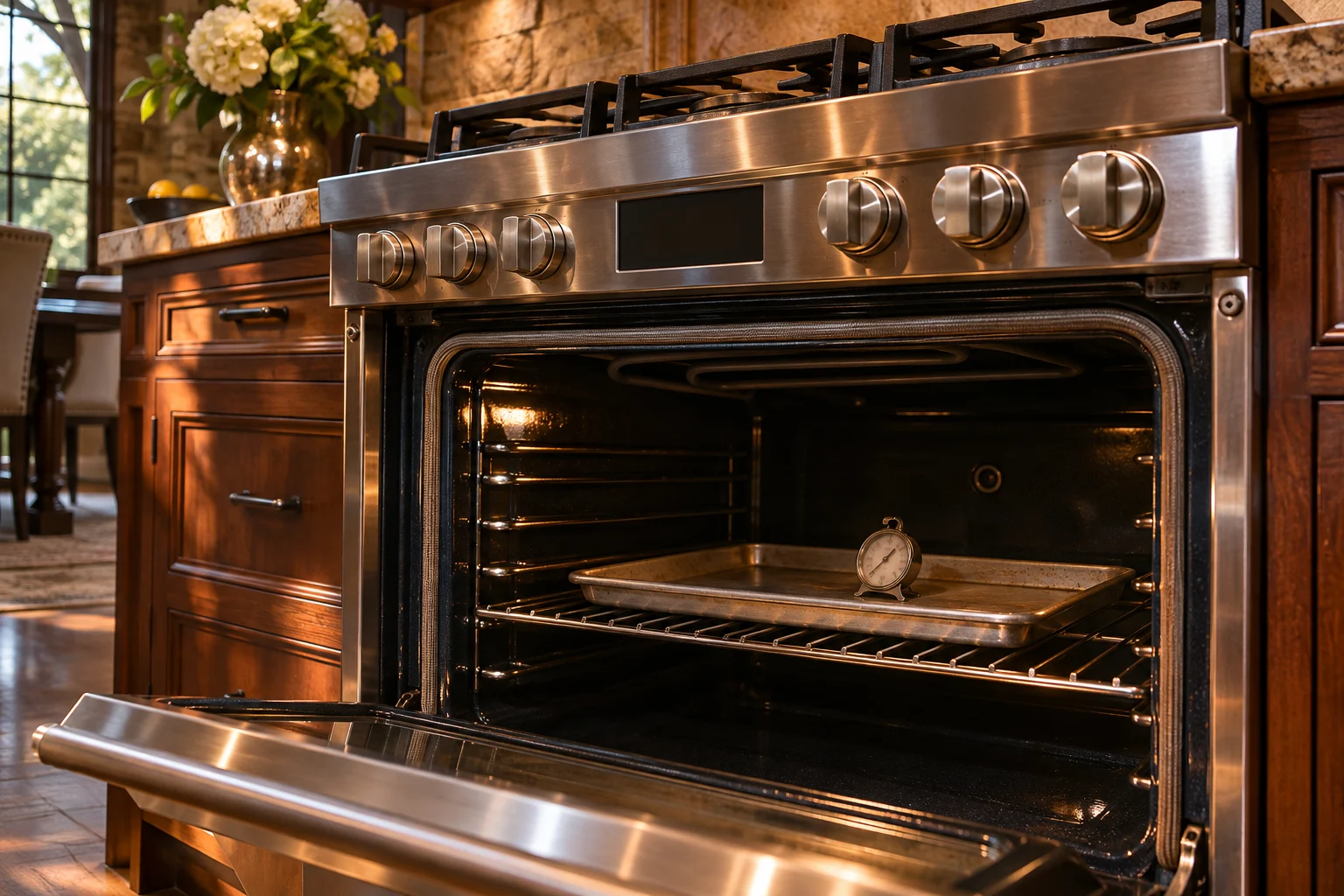
The owner manual explains the display and preheat indication. A shown target can be the requested setting, not a continuously updated measurement of the cavity center. Use the described procedure and an appropriate oven thermometer if checking temperature.
Electric bake elements need a complete circuit
An electric heating element converts electrical energy into heat. Depending on the mode, the oven may use a combination of baking, broiling, or convection heat. A failed element or connection can leave some warmth while preventing normal progress toward the target.
Some elements are concealed behind cavity surfaces. A smooth oven floor therefore leaves the heater itself hidden. Keep panels installed and avoid using a brief glimpse of glow as a diagnosis. Elements cycle, and their visible appearance alone is insufficient for choosing a replacement.
A technician can test the element, switching circuit, and supply under safe conditions. A lit clock does not establish that every heating requirement is met. Tell service about recent wiring, installation, or electrical interruptions if the complaint began afterward.
Gas oven ignition needs its own checks
On a gas oven, the ignition system and gas valve must establish a stable heating flame through the intended sequence. A weak or failed igniter, valve problem, or interrupted gas supply can prevent normal heating. Some faults can leave delayed or unsuccessful ignition even when another part of the range still operates.
Leave burner access, ignition measurements, and gas-valve work to a professional. Avoid removing the oven floor to watch ignition or using a flame to test the supply. If gas is smelled, leave and contact the gas utility from a safe location.
A range with gas cooktop burners can still use an electric oven. The Viking TVDR361 combines gas surface burners with an electric oven. Identify the actual oven heat source instead of inferring it from the cooktop.
| Observed pattern | Possible area | Safe first check |
|---|---|---|
| Slower after a setting change | Mode or target | Compare the same cooking selection |
| Door sits unevenly | Obstruction, gasket, hinge, or alignment | Inspect externally when cool |
| Partial warmth without normal progress | Element, ignition, or supply | Arrange heating-system assessment |
| Ready indication conflicts with results | Sensing or measurement conditions | Use a consistent thermometer method |
| Fault interrupts heating | Detected control or component condition | Read the full message and stop repeated attempts |
Temperature sensing governs heat commands
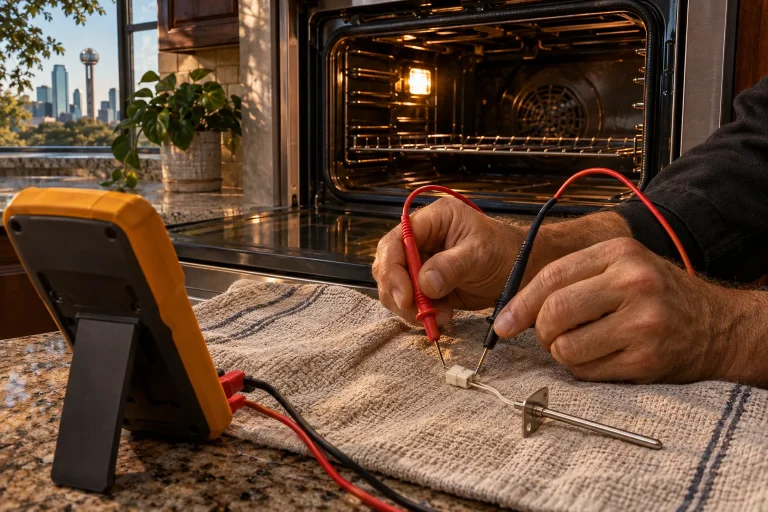
The oven sensor reports conditions to the control, which then operates the heat sources. A sensor circuit that is open, shorted, or poorly connected can prevent reliable regulation. The control and related wiring also need consideration before a sensor is selected for replacement.
Viking F02 concerns an open or shorted RTD oven temperature-sensor circuit. Cooking and cleaning are cancelled. Power down and arrange technical assessment of the sensor and connection.
A portable thermometer has its own position effects and response time. Keep it away from direct element contact and cavity walls and use its intended measuring method. Allow stable conditions rather than changing settings repeatedly to chase a momentary reading.
Door and airflow conditions affect the result
A tray, rack, or accessory can obstruct normal closure. With the oven off and cool, check that parts sit on their intended supports and nothing protrudes into the door opening. Inspect the gasket for visible damage and follow its gentle care method without pulling it loose.
A door that needs lifting or force requires assessment. Leave hinges and latches intact. Viking F01 concerns the latch failing to reach its required position. Turn the cycle off and power down instead of forcing a locked door.
Cooling airflow also protects operation. F03 concerns the cooling-fan feedback signal and cancels baking or cleaning. Clear reachable external ventilation obstructions, then leave fan access and electrical diagnosis to service.
Convection needs the right operating context
Convection moves heat through the cavity and can use a different heating pattern from a conventional bake mode. The Viking RVER3301 provides Vari-Speed Dual Flow convection with changing fan operation. A fan sound or pattern should be interpreted with the selected mode, while poor temperature performance still needs assessment.
Keep cookware clear of the intended air paths. A tightly packed cavity or unsuitable accessory arrangement can affect cooking results even when heating works. Use the load and rack placement described for the mode.
- Confirm the oven heat source, mode, and target.
- Keep the door closed and remove unneeded stored cookware.
- Inspect normal closure and accessible gasket condition when cool.
- Preserve the full fault message and observable heating behavior.
- Arrange service for continuing weak heat or returning faults.
Stop use for smoke, sparks, burning odor, runaway heating, or repeated breaker trips. Keep internal covers and protective devices installed.
Viking range help in Dallas
Keep one record: model, mode, target, temperature-check method, door condition, ignition or fan behavior, code, and checks completed. Use Viking range repair or contact in Dallas–Fort Worth. Explain whether the oven stays cold, heats weakly, or stops with a message so diagnosis can focus on the affected system.
Questions
Why does the oven warm but never seem ready?
A weak or failed heat source, heat loss, supply problem, or sensing issue can limit progress. Compare the selected mode and door condition before arranging diagnosis.
Can a glowing gas igniter still need repair?
Its appearance alone leaves the gas-ignition circuit to be assessed. A technician should test ignition and valve operation using the appliance procedure.
What does Viking F02 mean?
F02 concerns an open or shorted oven temperature-sensor circuit and cancels cooking and cleaning. Power down and arrange technical assessment.
Should I adjust calibration to correct slow heating?
Use calibration only for the correction described in the appliance instructions. A failed element, ignition issue, or electrical fault needs repair rather than a setting change.