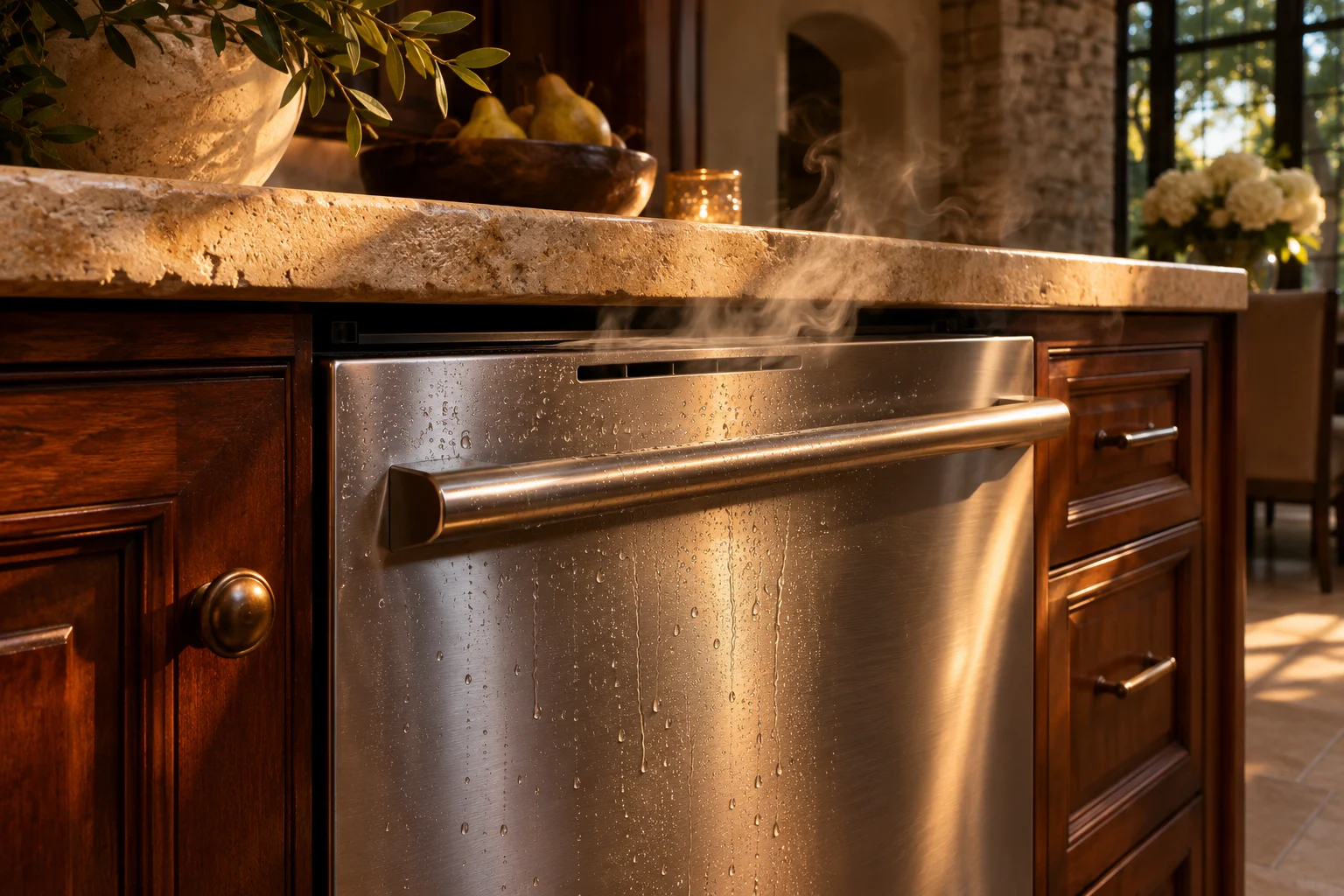
Steam from a Viking dishwasher vent can be normal as warm moisture leaves during drying or after the door opens. Start by checking the cycle stage and whether the moisture follows the intended vent path. Liquid leaking from a door seam, persistent wet cabinetry, unusual heat, or a burned smell needs assessment. Keep hands away from escaping steam and leave ventilation openings clear.
Warm water leaves moisture behind
Washing heats dishes and the surrounding water. After draining, moisture remains on surfaces and in the tub air. Drying moves or releases that moisture according to the dishwasher design. When warm damp air reaches cooler room air, a visible plume or condensation can appear.
Opening the door can release that warm air quickly. Stand back and let it dissipate before reaching into the load. Dishes and pooled water in overturned items can also be hot. Avoid placing a face or hand directly over a vent to check airflow.
The owner manual describes the drying system and normal vent behavior for the appliance. Use that description with the selected cycle and options. A visible plume by itself leaves a different starting point from water running onto the floor.
Drying systems can behave differently
The Viking FDWU524 uses Turbo Fan Dry to circulate drying air. A fan can therefore be part of the sound and airflow during that stage. Keep the intended air route unobstructed.
The FDWU724 combines Turbo Fan Dry with OpenAir drying, which opens the door automatically at the end of a cycle. Moist air released at that opening can be expected as part of its design. Keep surrounding items clear of the door’s intended travel.
A different dishwasher may retain a closed door and release moisture another way. Compare the appliance’s own drying description instead of expecting every Viking model to look or sound identical. Installation details also influence where escaping air meets cabinetry.
Distinguish venting from escaping wash water
| Observation | What it suggests | Useful response |
|---|---|---|
| Brief moist air during drying | Normal release may apply | Check the selected drying method |
| Steam after ordinary door opening | Warm humid air leaving the tub | Stand back and allow safe cooling |
| Liquid running from a door corner | Seal, loading, suds, or alignment problem | Stop and inspect safe visible conditions |
| Cabinet surfaces repeatedly remain wet | Vent routing or installation concern | Have the installation assessed |
| Steam-like haze with burned odor | Possible smoke or electrical issue | Stop use and arrange assessment |
Check the origin from a safe position. Moisture condensing near a vent differs from a puddle forming beneath the cabinet. A towel can protect an accessible surface during cleanup, but it should never cover the vent or conceal a recurring leak.
Loading and detergent can redirect water
A tall pan or utensil can obstruct a spray arm and change where water strikes. Seat racks normally and leave arms clear. A large dish holding the door slightly open can affect sealing and let moisture escape in an unintended place.
Excess foam from wrong detergent or overmeasurement can also escape. Use automatic-dishwasher detergent and the dose intended for the product and water conditions. Keep hand-washing liquid out of the tub. Avoid adding chemicals to collapse foam.
With the dishwasher off and cool, wipe accessible gasket residue gently. Look for damage or a folded section without pulling the seal away. A door that needs force or sits unevenly needs alignment assessment.
Drainage changes how much water remains
Viking code 1-5 means water remains after draining. Check the exposed hose for bends or obstruction and accessible filters for food. If the appliance connects to a disposer, its knockout must be removed as the installation requires.
The drain high loop and level installation are also part of Viking’s checks for that condition. Have uncertain routing corrected by an installer. Standing dirty water after every wash needs discharge diagnosis before additional loads.
Code 2-2 concerns filling. Confirm the water supply is open and the exposed inlet line is free from compression. Internal valves, sensors, and electrical checks belong to a technician when the problem persists.
Clean accessible components safely
- Turn the dishwasher off and allow hot surfaces and water to cool.
- Disconnect power before removing cleaning parts.
- Clean only the filters and reachable deposits described for owner care.
- Refit parts securely and keep vents unobstructed.
- Arrange service for recurring leaks or abnormal drying behavior.
Handle wet debris carefully because sharp fragments can be hard to see. Leave vent mechanisms, internal fans, wiring, and base-pan access to service unless the care instructions identify a specific owner procedure.
Cabinetry that repeatedly absorbs moisture deserves attention even if the dishwasher completes its cycle. An installer can compare panel arrangement, clearances, and vent path with the equipment requirements. Avoid improvising a shield that blocks airflow or redirects heat toward controls.
When to stop using the dishwasher
Smoke, sparks, burning odor, repeated breaker trips, or water near electrical parts means leave the machine off. Have an unsafe connection made safe before approach. Active leakage requires the source corrected before normal use resumes.
Persistent wetness with a damaged seal, door movement problem, or returning fault needs professional diagnosis. Keep protective devices intact and avoid repeated resets to continue washing.
Viking dishwasher help in Dallas
Prepare one record: model, cycle stage, moisture location, drying option, water remaining, code, and checks completed. Use Viking dishwasher repair or contact in Dallas–Fort Worth. Describe whether you see vapor, condensation, or escaping liquid so service can focus on drying, installation, or leakage.
Questions
Is visible steam during drying always a leak?
Warm moist air can leave through the intended drying path. Check whether moisture is venting normally or liquid is escaping from a seam.
Should I cover the vent to protect a cabinet?
Keep the designed vent path clear. Have installation and moisture exposure assessed if surrounding cabinetry stays wet.
Why does an FDWU724 door open after washing?
Its OpenAir drying feature opens the door automatically at the end of a cycle. Keep the intended movement clear.
What does code 1-5 mean?
Viking 1-5 identifies a drain error with water still in the tub after discharge. Check accessible filters, exposed hose, and the installation high loop.