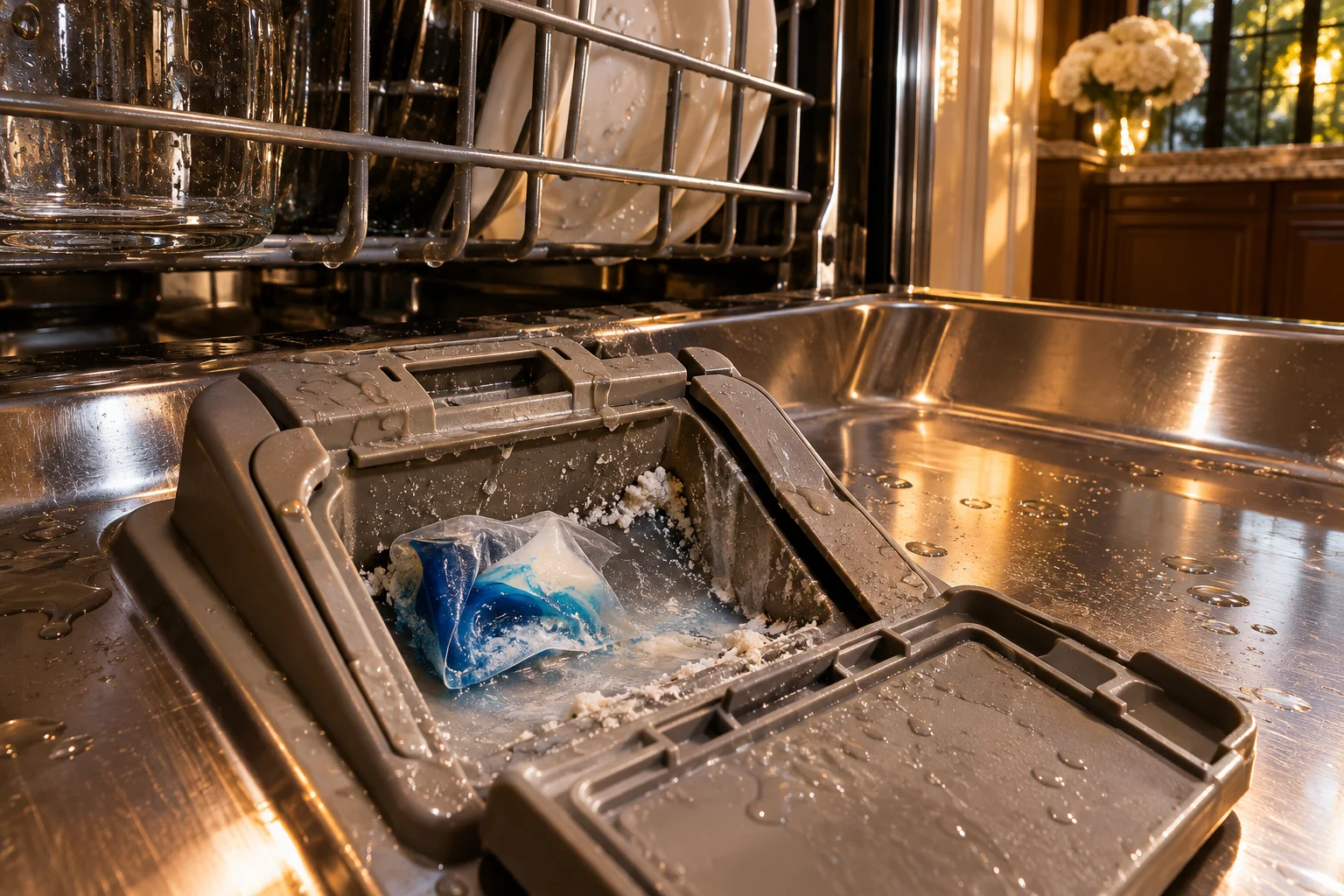
A detergent pod left in a Viking dishwasher usually means the dispenser could not release it properly or wash water did not reach and dissolve it effectively. Start by checking for a dish blocking the dispenser door and for tall items stopping a spray arm. Damp detergent, poor filling, weak circulation, or water that stays too cool can also leave part of the packet behind.
Use the pod’s location as your starting clue
If the packet is still inside the dispenser, look at the cup and lid. A large plate, pan handle, or cutting board can hold the lid shut even though the main dishwasher door closes normally. A sticky film in the cup can also keep the packet attached after the lid opens.
If the pod has fallen into the tub but remains mostly intact, consider the water reaching it. A blocked spray path, limited water supply, or a short or unsuitable cycle can leave the packet without enough wash action. Compare that with the rest of the load: widespread dirty dishes suggest a broader wash problem than a dispenser obstruction alone.
A partly dissolved mass smeared around the cup can begin with damp storage or a wet dispenser. Keep the detergent package closed and dry. Handle the packet with dry hands and follow its directions for placement. Use the dispenser location intended by the dishwasher’s operating instructions.
Let the dispenser door open freely
With the dishwasher stopped and cool, remove residue from the accessible cup and lid using a gentle method suited to the surface. Dry the compartment before loading a fresh packet. Check that the lid moves normally and can latch without force.
Load a normal group of dishes, close the racks fully, and inspect the space in front of the dispenser before starting. Something that seems clear with a rack pulled out may move into the door’s path when the rack is pushed home. Give the lid room through its full travel.
A cracked lid, damaged latch, or dispenser that remains closed despite clear space needs diagnosis. Leave the door panel and dispenser wiring closed. The release mechanism may be controlled electrically, so replacing parts based only on an undissolved pod can miss the actual cause.
| What remains after washing | Area to check | Practical step |
|---|---|---|
| Whole packet inside the cup | Lid movement and nearby loading | Clear obstructions and clean the cool dispenser |
| Sticky packet attached to the cup | Moisture and residue | Dry the cup and use properly stored detergent |
| Packet in the tub with many dirty dishes | Filling and spray circulation | Check supply and clear spray-arm movement |
| Residue with unusually cool washing | Incoming water and heating | Confirm the installation requirements and request help if persistent |
| Residue with standing water afterward | Filter and drainage | Follow safe filter care and inspect the visible drain hose |
Spray needs room and enough water to work
Spray arms distribute water over the load and toward the dispenser area during the wash. Turn them gently by hand with the appliance off to check for an obvious collision. Rearrange anything that catches, including utensil handles projecting below a basket.
Inspect visible spray openings for food debris and use only the care method permitted by the owner manual. Filters keep material out of the water circuit, but a blocked filter can restrict flow. Let hot water cool and disconnect power before removing an accessible filter. Refit it securely before operation.
The VDWU524 uses three wash arms and triple filtration, with variable-pressure washing that adjusts water conditions to the load. Those features still depend on clear spray paths and proper loading. A large item shielding a section of the rack can leave detergent and food behind.
A 1-4 diverter timeout concerns feedback from the mechanism that routes water between upper and lower wash arms. If it returns, a technician should inspect the diverter and its electrical path. That is more involved than clearing a visible utensil from an arm.
Water temperature and cycle selection matter
Detergent dissolves as water and wash action reach it. Incoming water that fails to meet the dishwasher’s requirements can delay useful washing, and a heating fault can leave the load poorly cleaned. Check the installation requirements for the appliance before changing a household water heater setting.
Select a full wash suited to the load and detergent. A rinse-only program is intended for a different task. On DFUD042, the available programs include Pots/Pans, Heavy, Normal, Light/China, Quick, and Rinse/Hold. Use the program description to choose the intended washing conditions.
A pod is a fixed dose. Avoid adding loose detergent around it as a quick response to poor dissolving, because excessive product can create residue and foam. If the chosen packet is unsuitable for the cycle or load, use a detergent approach permitted by both the appliance and product directions.
Filling and draining faults can explain the poor result
Viking 2-2 concerns filling that fails to meet its target condition. Check the accessible water shutoff and visible fill line for a kink, and consider whether water pressure elsewhere has changed. An inlet valve or internal restriction needs technician assessment.
1-5 concerns water left after draining. Viking describes checking filters, drain-hose blockage or kinking, and the installation’s high loop. A new disposer connection also needs its knockout opening checked by someone able to work on it safely. Persistent drainage trouble can undermine the next wash.
When to stop and request help
- Stop for leakage, smoke, electrical damage, or uncontrolled heating.
- Arrange service when the dispenser fails to open with its path clear.
- Seek diagnosis when the wash stays weak after normal loading and care.
- Leave internal pumps, heating components, and wiring to a technician.
Prepare the model, cycle, packet location after washing, condition of the dishes, and any fault message in one short account.
Viking dishwasher service in Dallas
For continuing detergent residue in Dallas–Fort Worth, request Viking dishwasher repair. Explain whether the pod remains in the dispenser or reaches the tub, since that distinction helps focus the inspection.
Questions
What does Viking dishwasher 2-2 mean?
It is a fill error. Viking describes checking that water is turned on, the fill line is not kinked, and household pressure has not fallen.
What does 1-4 concern?
It concerns diverter positioning feedback. The diverter routes wash water toward the upper or lower spray arm, so a returning fault needs technician inspection.
Which washing features does VDWU524 have?
It uses variable-pressure washing, three wash arms, and triple filtration. Keep the loading and maintenance appropriate for that design.