Prepare a Viking built-in appliance for service by clearing the work route, removing loose items from nearby storage, and explaining how the appliance is installed. Keep panels, trim, anchoring, and hidden connections intact. Tight clearances or a concealed water, gas, or electrical connection can make removal a professional task. Start with visible access and the reported symptom so the technician can plan the right approach.
Clear space around the appliance
Remove movable household items that block the route from the entrance to the appliance. Keep the floor dry and leave a stable standing area. A narrow passage, nearby furniture, or an island close to an opening can affect how tools and parts reach the work area.
Empty nearby storage only where it is safe and useful. A cabinet below a cooktop may provide access to an ordinary shutoff or installation space, while a drawer or shelf may need to remain in place until its removal method is understood. Tell service about any area that is difficult to reach.
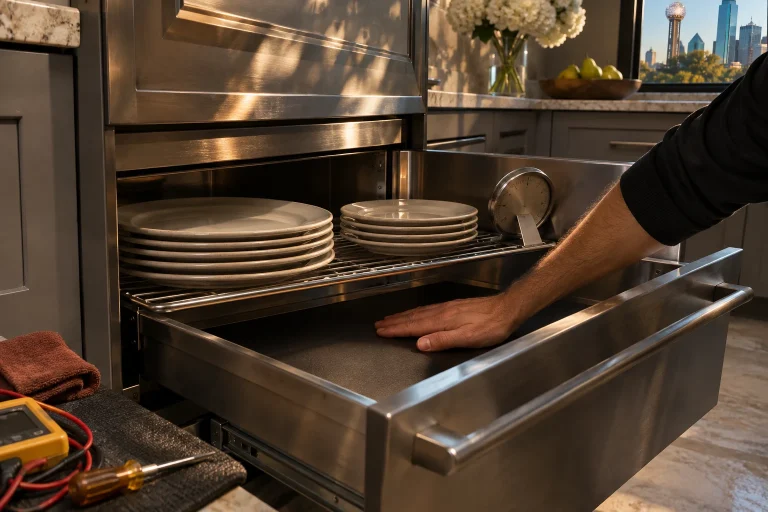
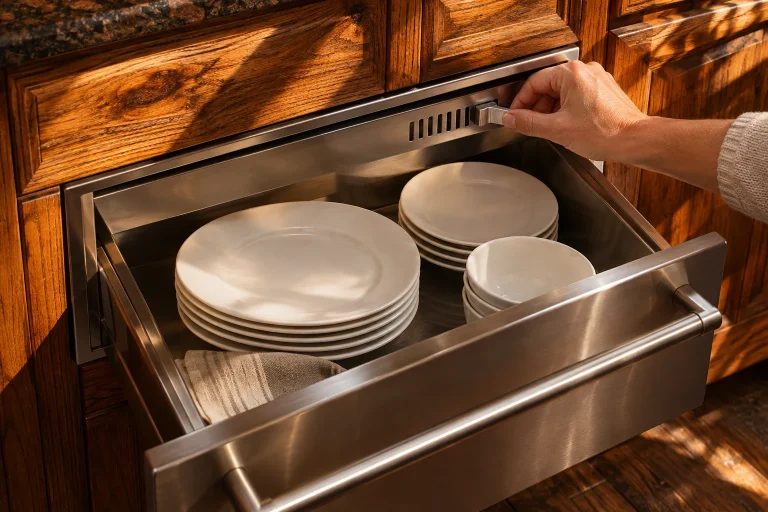
Keep children and pets away from the work area. A built-in unit may need supported movement or temporary access around open doors. Avoid treating an open oven door, refrigerator drawer, or warming drawer as a shelf for tools or household items.
Panels can serve different purposes
A decorative panel finishes the installation, while a service panel encloses parts that require controlled access. A grille may also form part of the ventilation route. Their attachment and removal methods differ, so leave unfamiliar retainers and screws untouched.
An appliance can be secured to cabinetry or another support. Removing visible trim may expose mounting points, wiring, sharp edges, or a heavy unsupported section. A technician or installer should identify those relationships before loosening anything.
The owner manual identifies access intended for routine care. That can include a removable cleaning component without granting access to everything behind it. Leave electrical covers and concealed mechanical parts closed while preparing the area.
Clearances are more than the visible opening
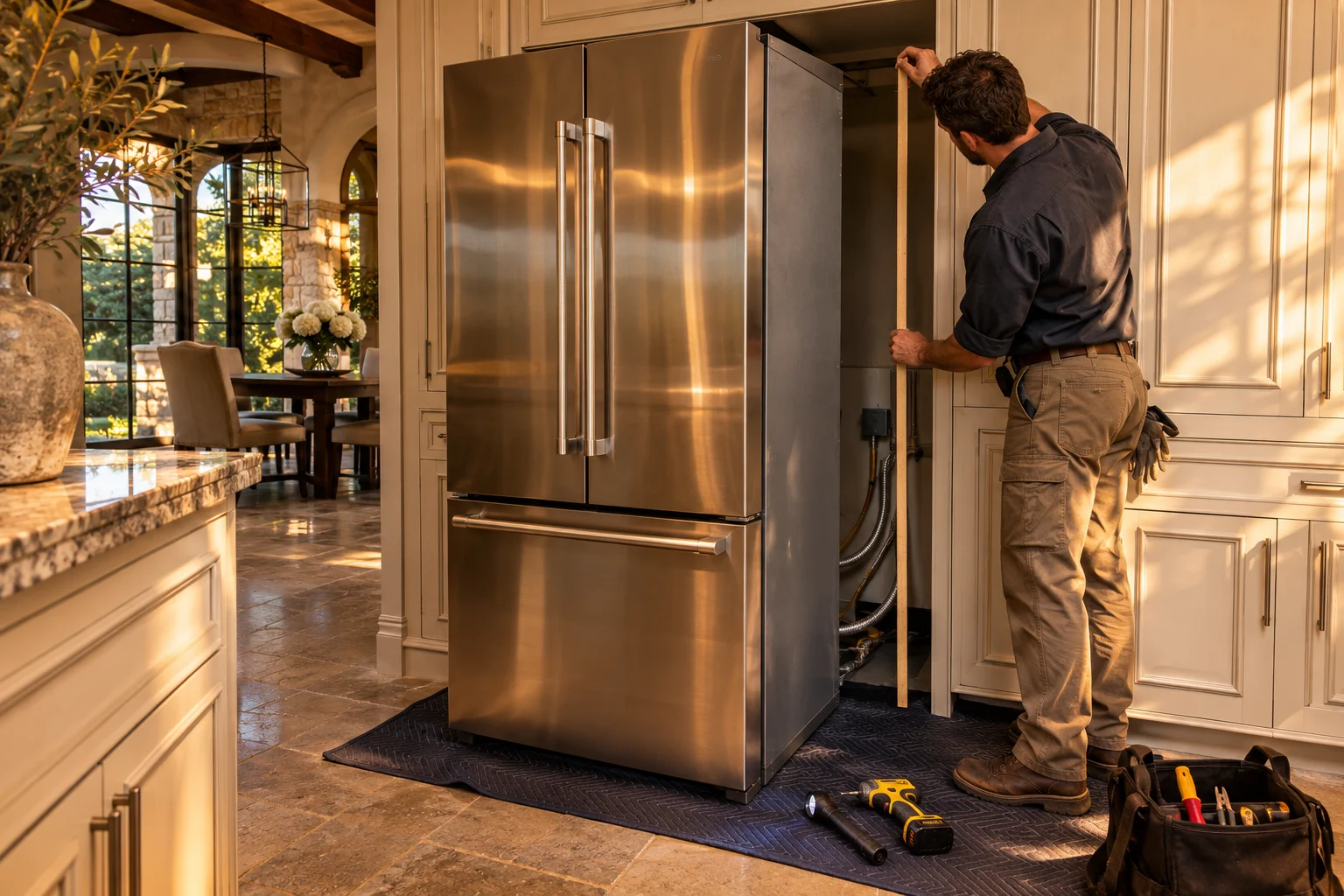
A built-in appliance needs the installation space and airflow arrangement specified for its design. Service also needs working space for the actual task. A unit that fits neatly into cabinetry may still need careful planning before a panel, door, or heavy assembly can be removed.
The Viking VESO5301 lists a cutout depth of 24 inches. That describes its installation opening, not a universal allowance for working behind it. Have the actual cabinet construction and connection route assessed if removal is needed.
The Viking VGRT362 also has model-specific cutout dimensions. A countertop opening and an oven niche present different access conditions. Keep the appliance identity tied to the installation when describing measurements or obstructions.
| Installation condition | Why service needs to know | Owner preparation |
|---|---|---|
| Close island or furniture | Limits handling and door movement | Move loose items and describe fixed obstructions |
| Decorative appliance panel | Changes access to retainers and mounting | Leave attached and identify any damage |
| Concealed connection | May limit safe movement | Describe its known location without opening wiring |
| Recent cabinet or flooring work | Can affect support, clearances, and removal | Explain what changed |
| Water or electrical hazard | Needs safety assessment before access | Stay clear and have the supply made safe |
Identify connections without disturbing them
A built-in appliance can have electrical, water, drain, or gas connections behind or beside it. Their length and routing limit how far the equipment can move. Pulling forward before identifying them can strain a connector or release water.
Keep ordinary shutoffs accessible where they can be reached safely. Tell the technician which breaker or isolation point is identified for the appliance, if known. Leave junction boxes, terminal covers, and gas fittings to professionals. A control set to Off is different from an isolated electrical supply.
If a leak is active, close a safely accessible water shutoff and leave the appliance out of use. Stay clear of water near electrical components. If gas is smelled, leave and contact the gas utility from a safe location. The hazard needs attention before service-space preparation continues.
The symptom determines the access plan
A door latch complaint, a cooling fault, and a control problem may require different access. Describe what the appliance does before assuming it must be removed. Some checks begin from normal front access, while internal repair may require supporting or withdrawing the unit.
Viking range F01 concerns the door latch not reaching its required position. Leave a resisting door undisturbed and turn the cycle off. Service can assess the latch and related system without an owner forcing access.
Range F03 concerns the cooling fan feedback signal and cancels baking or cleaning. Turn the cycle off and power down. Keep ventilation openings clear, but leave fan and wiring access to the technician.
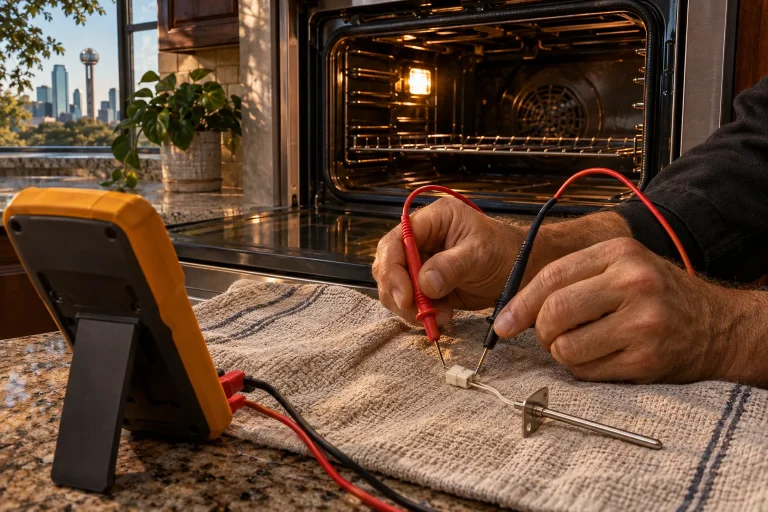
A code helps identify the system to investigate. The technician still needs the full appliance identity and operating behavior to choose the appropriate test and access route. Keep fault information available before power is removed when it is safe to read.
Leave heavy movement and disassembly to service
- Clear loose obstructions and protect the ordinary access route.
- Describe fixed cabinetry, trim, and nearby structures.
- Keep safe access to identified shutoffs available.
- Leave panels, mounts, and connection enclosures installed.
- Let the technician plan supported removal when the task requires it.
Smoke, sparks, a burning smell, or repeated breaker trips means stop use. Avoid restarting equipment to demonstrate a hazardous symptom. Internal electrical tests, sealed cooling work, gas connections, and structural removal need professional handling.
Viking service preparation in Dallas
Keep one record: model, symptom, displayed code, installation type, fixed access restrictions, recent remodeling, and known connection locations. Use Viking appliance service or contact in Dallas–Fort Worth. Explain the access conditions when arranging the visit so diagnosis and any required handling can be prepared around the real installation.
Questions
Should I pull out a built-in appliance before service?
Leave it installed unless a professional has arranged a safe removal method. Weight, anchoring, and hidden connections can make movement hazardous.
What should I clear before the visit?
Remove loose household items from the work route and nearby cabinet space when safe. Keep access to ordinary shutoffs and the identified electrical isolation point available.
Are cutout dimensions the same as service space?
Cutout dimensions describe the installation opening. A service visit may need additional working and handling space for the task.
What if a trim panel appears stuck?
Leave it in place and describe the obstruction. Forcing trim can damage its retainers or conceal how the appliance is secured.