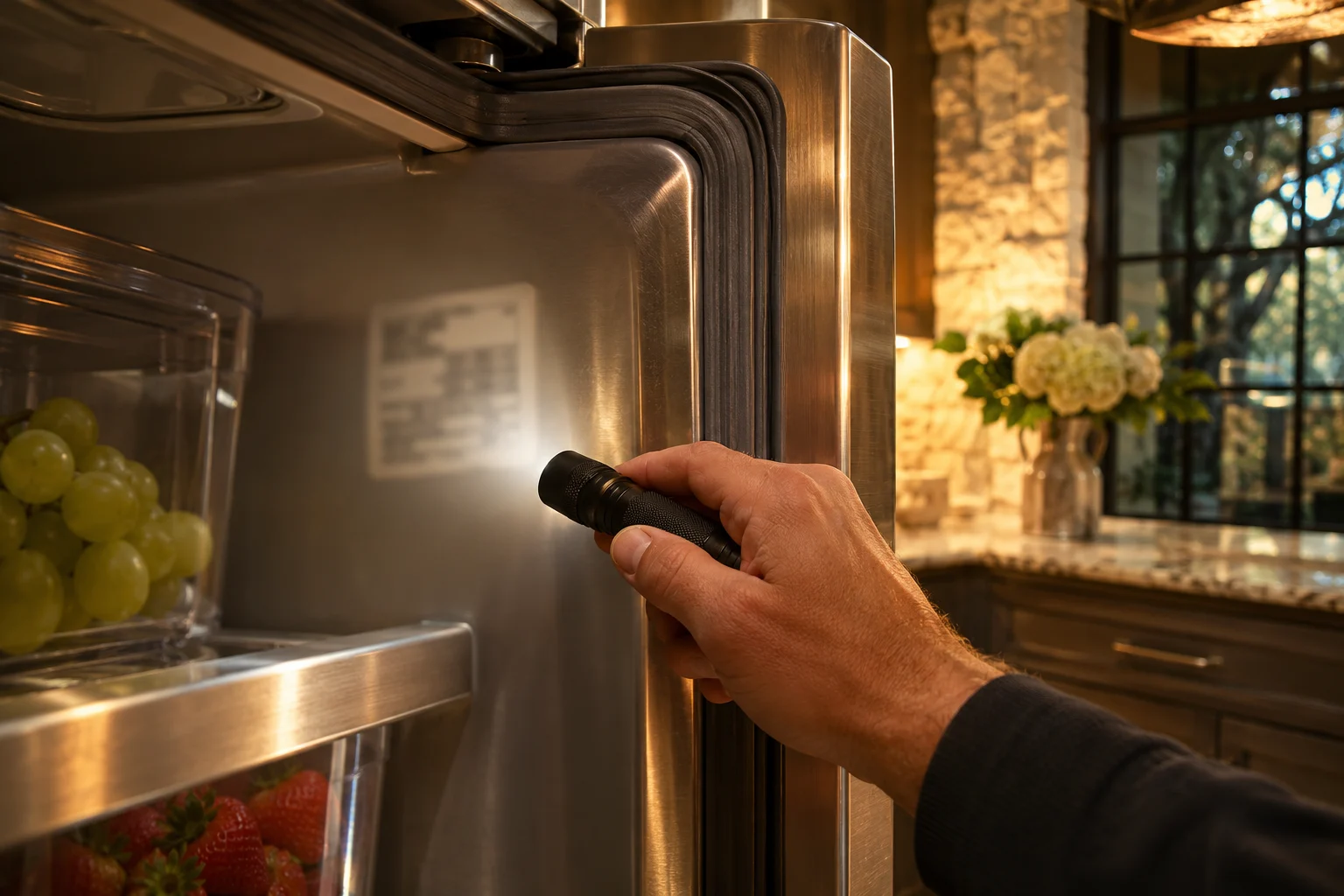
A Viking refrigerator’s rating label gives the model and serial identity needed to plan a repair visit. Start by opening the door and inspecting accessible interior walls, the door opening, and visible trim for a printed identification tag. Use a light and take a clear photograph; keep the refrigerator in place and leave fixed covers attached while looking.
Where to look depends on the refrigerator style
A full-height built-in cabinet, an undercounter refrigerator, and a wine cellar have different interiors and trim arrangements. Search accessible surfaces around the storage compartment before considering anything behind the appliance. The exact model/serial tag location by style is identified in the owner manual for the unit, so use that location diagram if a simple visual search does not reveal it.
For a bottom-freezer refrigerator, examine the fresh-food door opening and visible interior surfaces without pulling drawers beyond their normal travel. For an undercounter design, crouch where the door opening is visible and use a light to inspect its accessible edges and walls. On a wine unit, shelves and stored bottles can hide a tag; move contents carefully while keeping the door opening clear.
These are safe search areas, not fixed label positions for every model. Custom door panels can conceal the overall style, and visible decorative trim may look removable while being part of the installation. Leave screws, kick plates, and top access covers alone unless the care procedure expressly calls for their removal. A technician can locate identification that requires further access.
The model field tells the technician which appliance it is
Read the field labeled model, including its letters, digits, and any suffix. A small difference can distinguish configurations that look almost identical from across the kitchen. Copy the field as printed instead of shortening it to a series name or the characters remembered from a purchase receipt.
For example, FDBB5364 and VCBB5364 are both built-in bottom-freezer models with a stated width of 36 inches. A width measurement alone leaves their identities unresolved. The full model field gives the technician a more reliable starting point for product information and component selection.
Appliance categories also matter. FRUI3242D is an undercounter refrigerator/beverage center, while FDWCIC7240 is a wine cellar with two temperature zones. Describing either simply as a refrigerator can omit details that affect the symptom discussion. Send the label identity together with a plain description of the cabinet and the compartment that is affected.
The serial field identifies the individual unit
A serial number belongs to the particular appliance carrying the tag. It helps a service team distinguish units sharing a model designation and consult product information that may depend on production details. Keep the full field intact, including any letters or leading characters.
A barcode can help with identification, but the readable model and serial text is still valuable. Photograph the entire tag and then take a closer image if those fields are too small to read. Hold the camera square to the surface, reduce glare by changing the angle of the light, and verify focus before closing the door.
If characters are faded, send the photograph and indicate which portion is unclear. A guessed character can direct preparation toward the wrong configuration. Leave the original label attached and avoid solvents or aggressive scrubbing that could erase the remaining print.
| Label or observation | What it contributes | How to capture it |
|---|---|---|
| Full model field | Product configuration and the right technical information | Photograph every character, including the suffix |
| Serial field | Identity of the individual refrigerator | Include the readable field as well as any barcode |
| Electrical specification | The appliance’s specified supply requirements | Keep the whole specification panel in the image |
| Other printed technical fields | Details useful when service involves that system | Send the complete tag instead of cropping unfamiliar text away |
| Current display | The operating complaint or reminder | Take an additional image of the control display |
Electrical information helps with a supply complaint
The specification panel can include supply voltage, frequency, and current information. Those entries describe what the appliance requires; they are useful when the refrigerator has lost power or a circuit question has arisen. Reading the label is an owner task, while measuring live circuits and repairing electrical connections are professional tasks.
FDBB5364 requires a dedicated 115 V, 60 Hz, 15 A circuit. Keep that requirement tied to the identified model. Other Viking refrigeration styles need their own product information checked, especially when the installation or connection is being changed.
A label may carry other technical fields unfamiliar to the owner. Preserve them in the photograph so the technician can decide what matters. Opening sealed-system components, handling refrigerant, or accessing concealed wiring is beyond a label-reading inspection.
Keep the changing display apart from the fixed identity
A control panel message describes an operating condition, alarm, or maintenance need. It is useful alongside the tag but belongs in a different photograph. For example, CL concerns condenser cleaning. Dust and pet hair can restrict the condenser, and the cleaning procedure includes switching off the main power before work.
A high-temperature alarm concerns excessive compartment temperature. Muting the sound leaves the display flashing until the temperature returns to its normal range. If food is warming, prioritize protecting the contents and obtaining help instead of spending a long time searching for the tag.
A compact information set for the visit
- Full label photograph with readable model and serial fields.
- Current display image and the compartment affected.
- A brief account of cooling, noise, leakage, or door symptoms.
- Recent power interruptions, cleaning, or movement of the appliance.
- Access concerns, including custom panels or tight cabinetry.
Collect those details in one message. Keep the identification search brief with the door open, and stop if reaching the tag would require moving a heavy built-in cabinet. Leaking water near electrical parts, smoke, or sparking needs immediate attention to safety.
Preparing a Viking visit in Dallas
For Viking refrigerator repair in Dallas–Fort Worth, send the label image with the symptom when arranging the visit. If the tag is inaccessible or unreadable, explain that directly and describe the refrigerator style. The technician can plan to verify identification during the inspection.
Questions
Does refrigerator width identify the Viking model?
FDBB5364 and VCBB5364 both have a stated width of 36 inches. Read the model field on the appliance label to identify the unit.
Which electrical supply is stated for FDBB5364?
It requires a dedicated 115 V, 60 Hz, 15 A circuit. An electrical professional should assess the actual connection when supply is in question.
Is CL part of the model number?
CL is a condenser-cleaning reminder on the refrigerator display. The identification label and a changing display message serve different purposes.