Viking appliance sensors turn conditions such as temperature, pressure, or door position into information a control can use. When a sensor, its connection, or the receiving circuit fails, the appliance may stop a cycle, heat unevenly, or display a fault. Begin by checking visible door obstructions and capturing any message; leave internal electrical testing to a technician.
Think of the control as a listener
A control can switch heating, cooling, or washing on and off, but it needs feedback to know whether the result is correct. A sensor supplies that feedback. Some sensors provide a changing electrical reading, while others simply signal that a condition has been reached. A wire carries that information to the control.
This explains why troubleshooting includes more than the sensing part. A loose connector can interrupt a healthy sensor’s signal. A damaged wire can create a short, and a control input can fail to read a correct signal. Electrical diagnosis follows the entire path so the repair addresses the cause of the interrupted information.
Appliances use different combinations of these devices. A description of a pressure switch or thermistor explains a general operating principle; the actual equipment inside a particular appliance must be identified before testing. The owner manual helps establish the appliance’s normal behavior and the meaning of its user controls.
Thermistors translate temperature into a reading
A thermistor changes resistance as its temperature changes. The control interprets that resistance as a temperature signal and uses it to manage operation. In cooling equipment, temperature feedback helps determine when cooling is needed. If the signal becomes implausible or disappears, the appliance may run incorrectly or stop with an error.
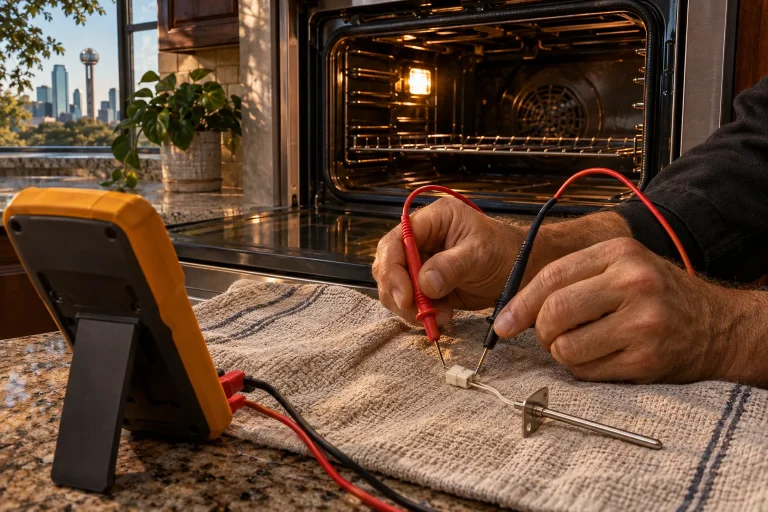
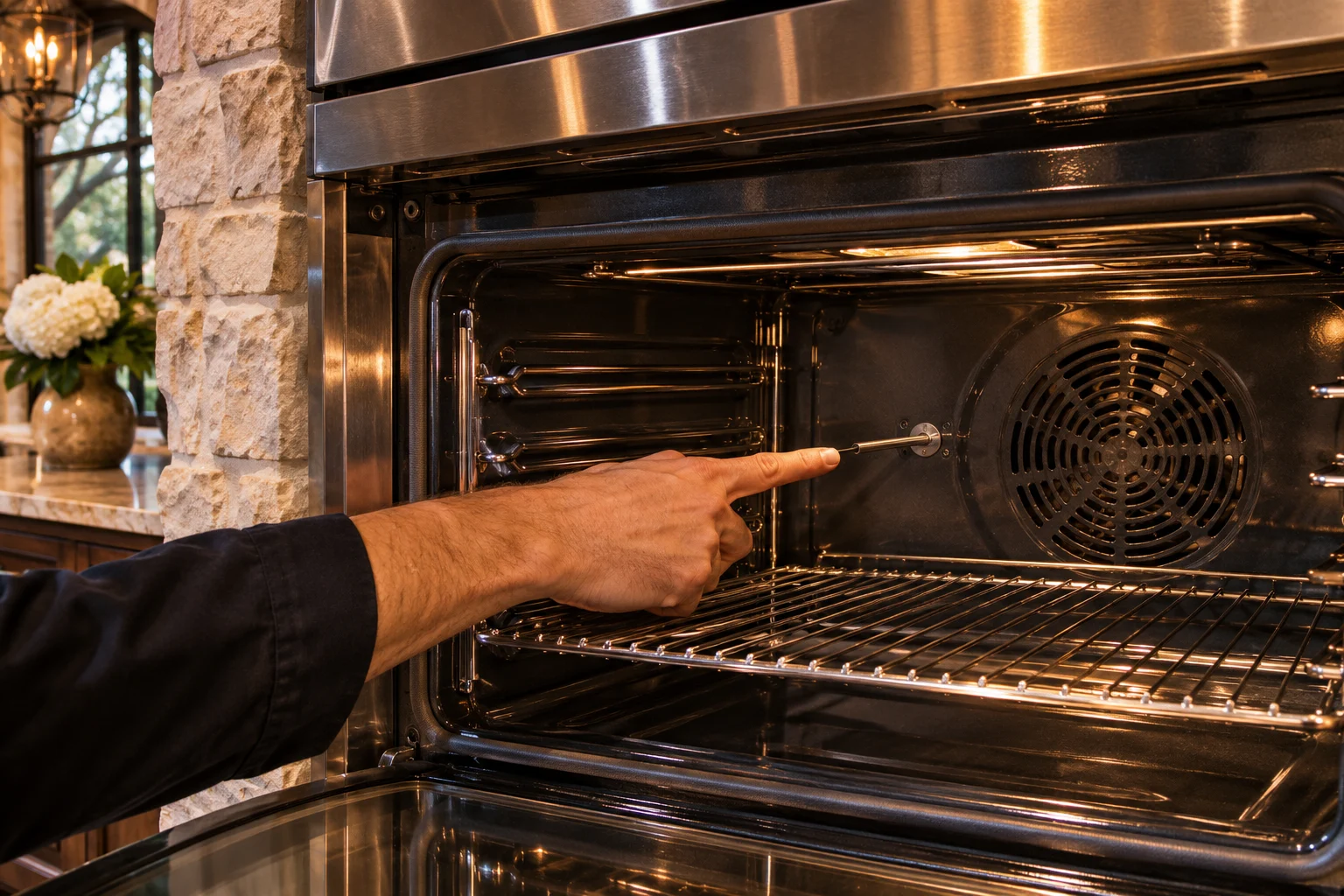
Other resistance-based temperature sensors use a different construction. An oven RTD also changes resistance with temperature, allowing the control to regulate heat. It should be evaluated using the test information for that sensor, because a reading that is normal for one design may be wrong for another.
On the covered Viking range, F02 means the oven RTD circuit is open or shorted. The fault cancels cooking and cleaning and leaves the control inoperable. The Cycle light flashes once while the Clean light stays off. The repair path includes powering down and checking the RTD connection or replacing the sensor as required.
A homeowner can describe whether heating never begins, stops unexpectedly, or behaves differently from usual. Removing a hot sensor, checking resistance inside a powered appliance, or substituting a sensor with an unknown specification belongs outside an owner check. Those tasks require the correct circuit information and safe access.
Pressure switches respond to a physical condition
A pressure switch changes electrical state when pressure reaches its operating point. In an appliance that uses one for water-level control, a pressure connection communicates the effect of water in the system. The control can then respond to whether the required level has been reached.
A restricted pressure passage, damaged sensing connection, or failed switch can make the reported condition differ from the actual one. Depending on the appliance, symptoms can include filling that stops unexpectedly, an incomplete cycle, or a control waiting for a condition that never registers. A technician checks the pressure pathway along with the switch and wiring.
Keep this general principle distinct from a model’s advertised wash system. The VDWU524 dishwasher adjusts washing water volume, pressure, and temperature to suit the load and soil level. It also has three wash arms and triple filtration. Those features describe operation; identifying a particular sensing device still requires the appliance’s technical information.
Door switches and latch feedback protect the cycle
A door switch tells the appliance whether the door has reached the position needed for operation. Latch feedback may also tell a control whether a lock has completed its movement. If a package, rack, or dirty contact surface prevents proper closure, the appliance can react as though the door remains open.
| Device or signal | What it reports | What an owner can observe |
|---|---|---|
| Temperature sensor | Heat or cold at its sensing point | Unexpected heating, cooling changes, or a displayed fault |
| Pressure switch | Whether a pressure condition has been reached | A cycle stopping around filling or another pressure-dependent stage |
| Door-position switch | Whether the door is closed | Closure resistance or operation changing when the door is seated |
| Latch feedback | Whether the lock reached its required position | A lock fault or canceled cooking or cleaning |
The range F01 latch fault means the lock is outside the required position for cooking or cleaning. It is a critical fault that cancels the current cycle and turns off the elements. Turn the cycle off and power down for correction of the lock problem. Forcing the latch can damage the mechanism and interfere with its protective function.
A fan can provide feedback too
Some systems monitor motion instead of temperature or pressure. A Hall-effect signal lets a control receive information about fan operation. With range F03, the cooling-fan signal is outside what the control expects. Bake or clean is canceled; the Clean light is on and the Cycle light flashes 3 times. Turn the cycle off and power down before service addresses the cooling-fan issue.
Prepare for a sensor diagnosis in Dallas
- Clear visible door obstructions and check closure without forcing a latch.
- Keep protective covers and safety switches in place.
- Stop operation if there is smoke, sparking, or uncontrolled heating.
- Record the model, full display, operating stage, and symptom together.
For persistent trouble in Dallas–Fort Worth, arrange Viking appliance service. The useful question is which signal is missing or incorrect and why. Testing the sensor, its wiring, and the control connection gives the technician a sound basis for the proposed repair.
Questions
What is the range F02 fault?
It concerns an open or short in the oven RTD temperature-sensor circuit. Cooking and cleaning are canceled and the control becomes inoperable.
What information is missing during F03?
The range control is missing the cooling-fan Hall-effect signal within its allowed frequency range. Bake or clean is canceled.
Does VDWU524 adjust its washing action?
Yes. Its variable-pressure washing changes water volume, pressure, and temperature according to the load and soil level.