A Viking range convection fan may be quiet because a non-convection mode is selected, its operating pattern includes pauses, or a door condition interrupts the function. Persistent failure can involve the fan motor, obstruction, wiring, or controls. Start by confirming the selected mode and normal door closure. If cooking becomes uneven, the fan scrapes, or a fault appears, leave internal inspection to a technician.
Begin with the cooking settings
A range can offer baking, broiling, convection, and other modes with different heating patterns. The fan’s role depends on that selection. A quiet fan during a mode that does not call for circulation is a different observation from no movement during the convection function.
The owner manual explains when the fan runs and how door opening affects it. Use that description before deciding that a brief pause is a motor failure. Keep door openings limited while assessing ordinary cooking because each opening changes heat conditions.
Confirm which oven is selected on a range with multiple cavities. Controls and fan arrangements can differ between compartments. A cooking result from one cavity should be connected with that cavity’s mode and display.
Fan design can change the sound and direction
The Viking RVER3301 uses Vari-Speed Dual Flow convection with different fan speeds and reversing rotation. A change in sound or direction can therefore be part of its design. Compare the actual behavior with the mode description.
The RVIR330 also uses a reversing, multi-speed convection fan. Its induction cooktop is a different system from the oven circulation. Identify the affected function when reporting a problem instead of describing every fan or cooking-zone symptom together.
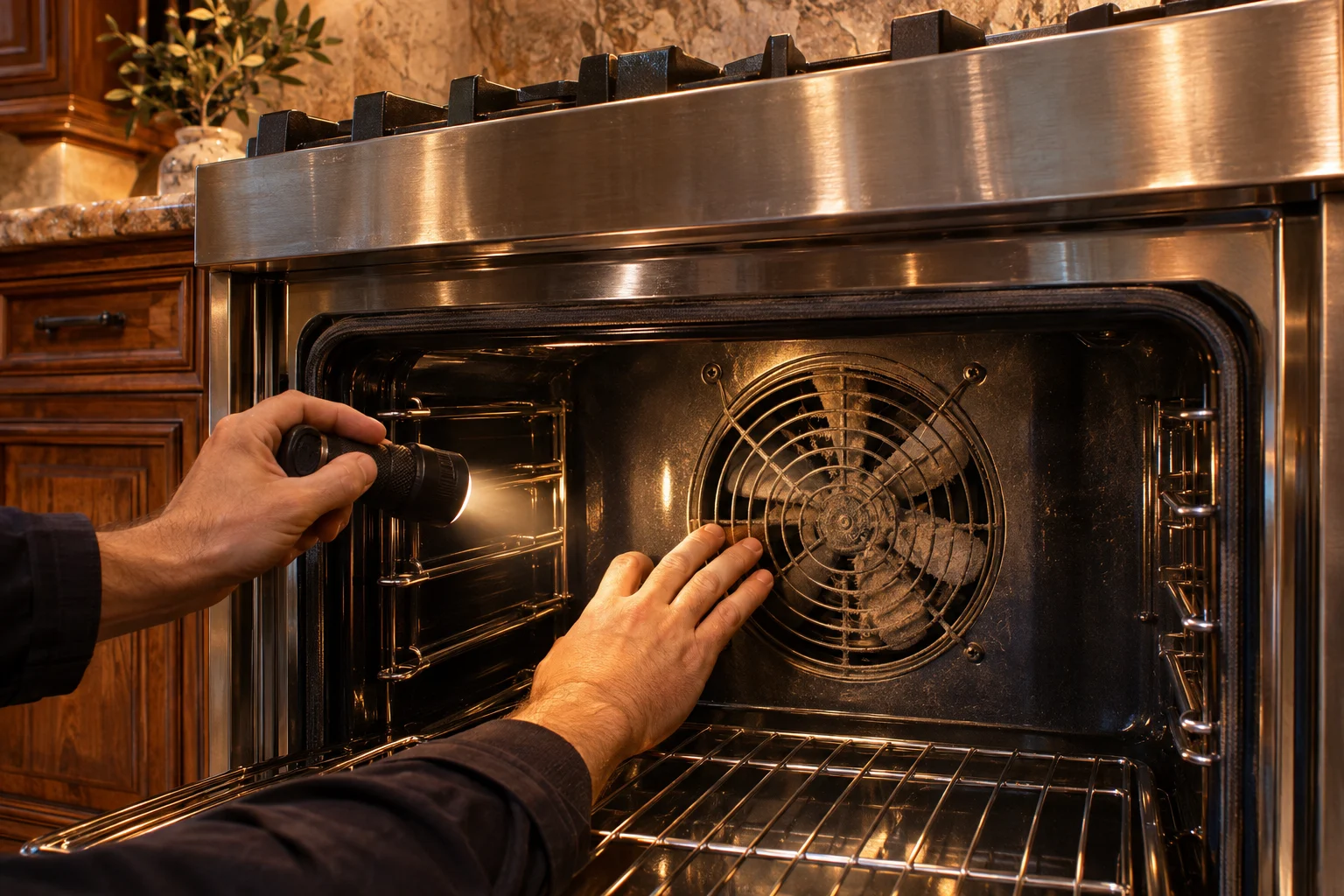
Use the window and ordinary sounds where practical, keeping the door and covers in their intended positions. Avoid running an overheating or grinding appliance to obtain a better view. A guard should stay installed even when the fan is visibly stationary.
Convection and cooling airflow are different
The convection fan moves heated air through the cooking cavity to support more even results. A cooling fan helps manage heat around electronic and structural components. A range can therefore have airflow after cooking stops or a cooling-related fault that interrupts operation.
A sound continuing outside the cavity after cooking may belong to cooling. A circulation complaint during a convection mode needs the cooking fan assessed. The technician can distinguish them using the appliance construction and operating sequence.
| Observation | Area to check | Next response |
|---|---|---|
| Fan quiet in ordinary bake | Selected mode behavior | Read the mode description |
| Brief pause with a door opening | Door-dependent operation | Compare normal instructions |
| No circulation with uneven convection results | Fan, control, or wiring | Arrange diagnosis |
| Scraping from the rear cavity | Mechanical contact or damaged guard | Stop use and seek assessment |
| F03 interrupts the cycle | Cooling fan feedback | Turn off, power down, and arrange service |
Check accessible loading and door closure
A pan or rack positioned against the fan cover can create contact or obstruct circulation. With the oven off and fully cool, remove unnecessary cookware and seat racks evenly. Use accessories intended for the appliance and leave the designated airflow area clear.
Look for a loose item or heavy food deposit on reachable surfaces. Clean by the approved care procedure with power disconnected for maintenance. Avoid pushing tools through a fan opening or spraying cleaner behind the cover.
The door should close without force. A displaced rack or protruding pan can prevent full seating. A damaged hinge, gasket, or latch needs assessment. Keep door switches and protective mechanisms intact instead of holding them to imitate closure.
Persistent fan failure needs testing
A motor can fail, a blade can contact an obstruction, or a connection can stop the control command reaching the assembly. The control may also be responding to another fault. A technician needs to assess the mechanical movement and electrical circuit together.
Leave the fan cover and service panels installed. Internal parts can be sharp or hot, and the motor can start unexpectedly if power is present. A hand spin or household lubricant is unsuitable troubleshooting for an installed oven fan.
A damaged guard or persistent grinding deserves repair before continued cooking. Keeping the heat on while airflow is unreliable can affect the cooking result and surrounding components. Use another safe cooking method while assessment is pending.
Use codes with the affected system
Viking F03 means the control is not receiving the expected cooling-fan feedback signal. Viking directs turning the cycle off, powering down, and correcting the cooling-fan issue. Leave that correction to service.
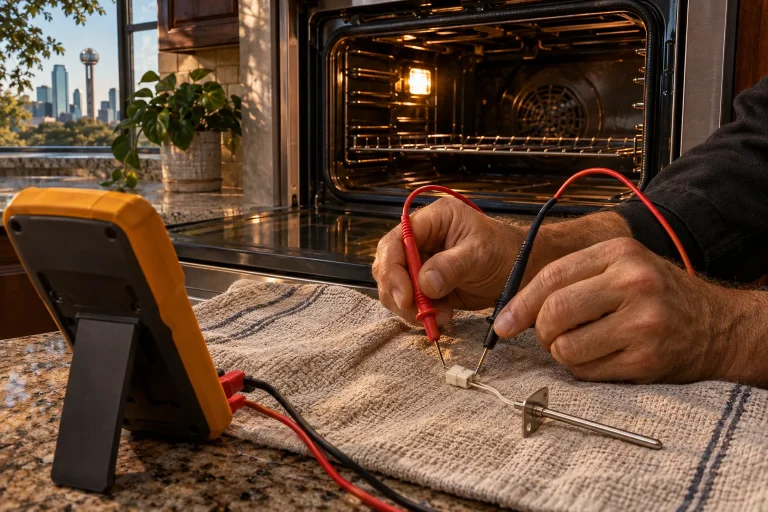
F02 concerns an open or shorted oven temperature sensor. It can cancel cooking and cleaning cycles. A stopped cycle with that message needs sensor-system diagnosis rather than assuming the convection motor is the sole fault.
Smoke, sparks, burned odor, repeated breaker trips, or uncontrolled heating means stop use. Have an unsafe electrical connection made safe. If gas is smelled, leave the area and contact the gas utility from a safe location.
Useful checks before a visit
- Confirm the oven compartment and convection mode.
- Compare the fan behavior with its operating description.
- Check normal door closure and cool rack placement.
- Preserve any complete fault message.
- Arrange service for persistent absence, noise, or interrupted cooking.
Prepare one record: model, compartment, mode, fan sound, cooking result, door behavior, code, and checks completed. Use Viking range repair or contact in Dallas–Fort Worth. Those details help service focus on cooking circulation, cooling airflow, or the controls.
Questions
Should a convection fan run in every cooking mode?
Fan behavior depends on the selected mode and appliance design. Compare the operating description with the actual selection.
Is the cooling fan the convection fan?
They serve different tasks. Convection circulates cooking air, while cooling airflow manages heat around appliance components.
What does Viking F03 mean?
F03 concerns the cooling fan feedback signal. Turn the cycle off, power down, and arrange correction of the cooling-fan issue.
Can I turn the fan by hand to test it?
Keep the fan guard installed and hands away from internal moving parts. A technician should assess motor movement and the circuit safely.