Viking appliance odors commonly come from food residue, grease-loaded filters, moisture in a drain path, or spills heated during cooking. Start by identifying the smell and the appliance involved before choosing a cleaning product. A sour or greasy odor calls for accessible cleaning and drainage checks. Gas odor, electrical burning, smoke, or sparking means stop operation and respond to the hazard before any maintenance.
Let the odor type determine the response
A stale-food smell after washing can point toward retained soil or water. Grease odor around ventilation may come from deposits in filters and reachable liner surfaces. A cooking smell that returns whenever the oven heats can involve old spills. These conditions need cleaning appropriate to the affected surface and system.
An acrid electrical odor deserves a different response. Stop use and leave covers closed. A hot plug, discolored connection, smoke, or repeated breaker trip needs professional assessment. Disconnect only at a safe, dry, accessible point; leave an unsafe connection untouched until the supply is made safe.
If gas is smelled, leave the area and contact the gas utility from a safe location. Avoid switches, flames, and repeated ignition attempts. Cleaning steps can wait until the gas concern has been addressed.
Dishwasher filters hold food as well as water
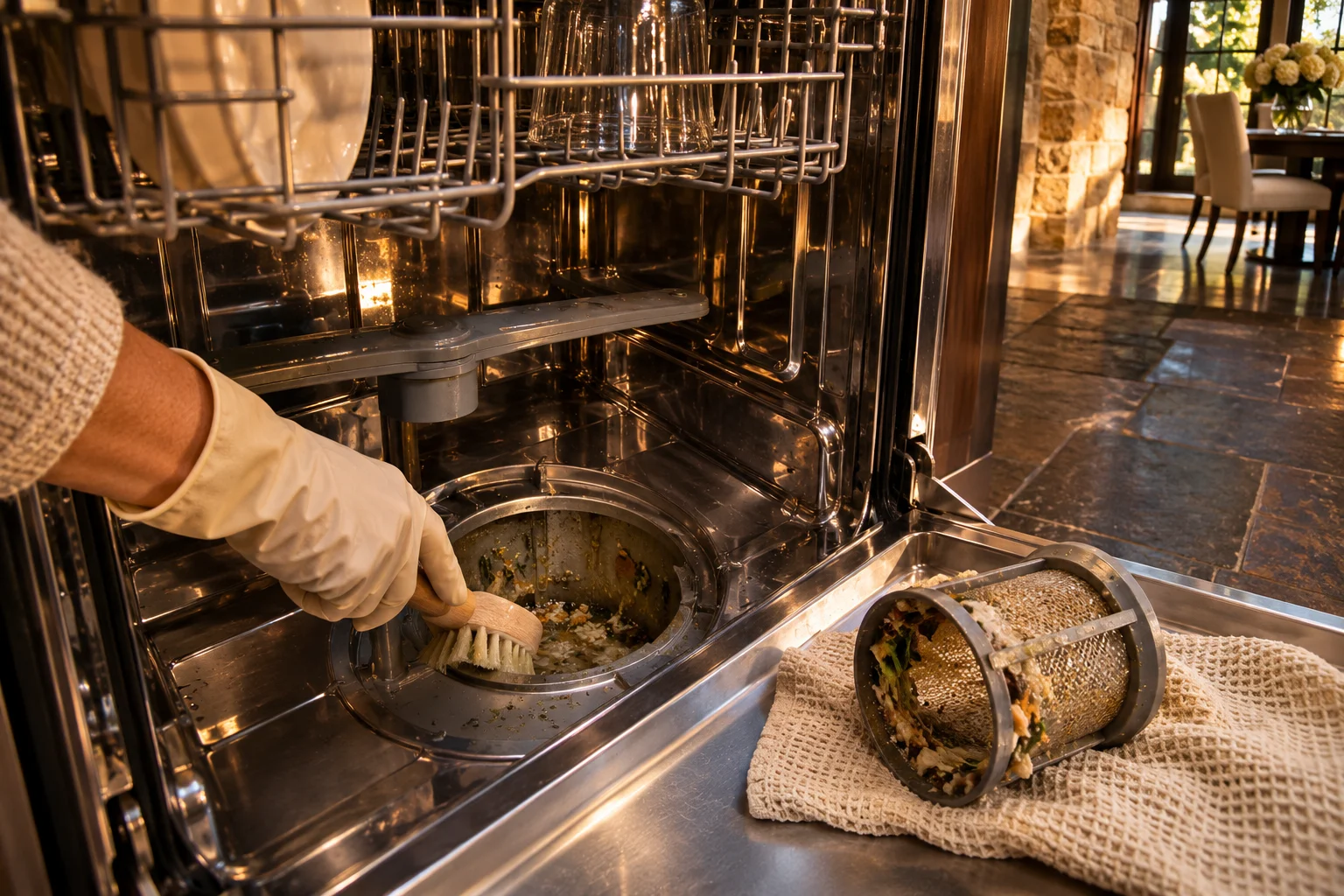
Filtration keeps food particles from circulating back over dishes. A loaded filter can retain grease and debris between uses, producing odor. Remove accessible parts by the owner care procedure, with power disconnected, and clean their mesh and housing gently.
The Viking VDWU524 uses triple filtration in its water circuit. Its washing system also has multiple spray arms, so loading and clear spray paths matter. A clean filter works alongside effective circulation and the selected program to remove soil.
Handle wet debris carefully because glass or other sharp fragments can be hidden. Avoid reaching blindly into pump openings. Refit filtration securely before another wash so water follows the intended path. A damaged screen or retainer needs assessment instead of modification.
Check drains when odor comes with retained water
A dishwasher that leaves dirty water behind can develop odor even after visible surfaces are wiped. Inspect the exposed drain hose for compression or bends and check whether the nearby sink drains normally. A new disposer or plumbing change can affect the dishwasher discharge connection.
Leave concealed pump access and pipe disassembly to a professional when accessible checks are insufficient. Chemical drain opener is unsuitable for an appliance water circuit. It can damage materials and leave hazardous liquid for the next person opening the system.
Refrigerator drain paths can also collect residue or become obstructed. Water under drawers or a recurring puddle needs the source identified. Clean only the access described for owner care. A hidden drain or collection area belongs to service when covers must be removed.
| Odor and location | Possible source | Useful next check |
|---|---|---|
| Sour dishwasher odor | Food in filtration or retained water | Clean accessible filters and inspect drainage |
| Greasy ventilation odor | Loaded grease filter or liner deposits | Use approved filter and surface care |
| Food odor in refrigeration | Spills, spoiled contents, or trapped moisture | Inspect accessible storage and wet areas |
| Burned food during oven heating | Old cooking residue | Clean the cooled cavity by its procedure |
| Electrical burning or gas smell | Potential hazardous fault | Stop use and seek appropriate help |
Ventilation filters need the right method
A grease filter captures cooking particles; a charcoal odor filter, where fitted, treats recirculating air. Those components have different care requirements. A washable metal filter can need cleaning, while a charcoal element may require replacement. Use the method and product specified for the actual filter.
Support a filter while releasing its retainer and keep it away from hot burners. Let surfaces cool and disconnect power before removal. Clean reachable liner deposits without flooding grilles or electrical areas. Leave the blower, wiring, and concealed duct surfaces to service.
Persistent odor with weak extraction can involve a duct obstruction or fan problem. Have the complete airflow route assessed after ordinary maintenance. A stronger fragrance or deodorizer masks the complaint while grease remains in the system.
Refrigerator cleaning starts with the contents
Check containers, produce, and spills beneath removable storage pieces. Discard spoiled material appropriately and clean accessible shelves and bins with the permitted method. Dry cleaned parts before refitting and keep containers closed to limit odor transfer.
The Viking FDBB5364 has humidity and deli drawers with soft-close slides. Remove and refit storage parts only by their intended procedure. Liquid can travel beneath a drawer, so inspect reachable surfaces without dismantling rails or concealed cooling assemblies.
Check door closure and storage conditions if odor accompanies warming. A package in the door path or a dirty gasket can let warm air enter. Persistent cooling trouble needs diagnosis and protection of perishable contents.
Oven residue and technical faults need distinction
Let the oven cool before cleaning spills. Use the cavity and rack procedures for the finish and accessories. Avoid spraying cleaner into fans, vents, controls, or gasket material. A self-cleaning feature has its own preparation and door requirements.
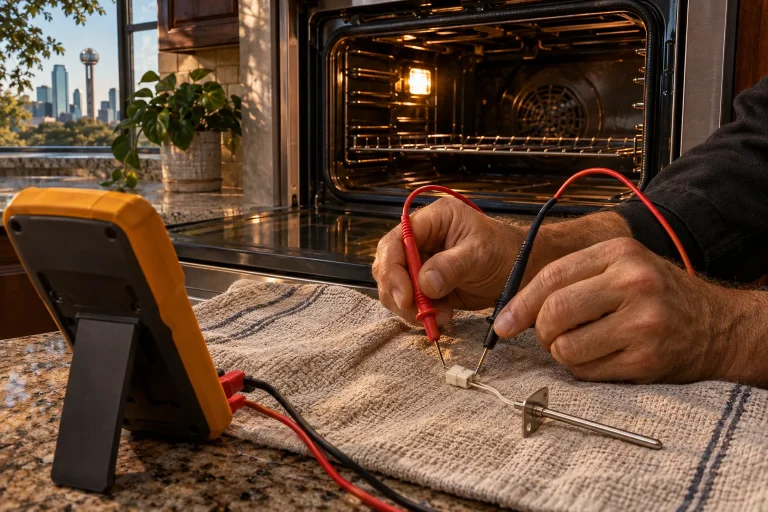
Viking range F03 concerns cooling-fan feedback and cancels baking or cleaning. F02 concerns an oven temperature-sensor circuit fault. Stop the cycle and arrange service for those conditions instead of treating every heating-related smell as residue.
A practical order for owner checks
- Identify the odor and respond to gas or electrical hazards first.
- Remove food sources and clean accessible spills.
- Clean or replace filters by their type.
- Inspect visible drainage and airflow conditions.
- Arrange service for returning odor with leaks, poor performance, or faults.
Keep one record: appliance model, smell type and location, operating stage, water or airflow symptoms, code, and maintenance completed. For Dallas–Fort Worth help, use Viking appliance service or contact. Explain the associated performance change so service can focus on filtration, drainage, ventilation, or a technical fault.
Questions
What should I do about a gas smell?
Leave the area and call the gas utility from a safe place. Avoid switches, flames, and further attempts to operate the appliance.
Can a dirty filter cause dishwasher odor?
Food and grease retained in filtration can develop odor and interfere with washing. Clean the accessible assembly by its care procedure and refit it correctly.
Why does odor return after cleaning the tub?
Residue may remain in a filter, drain path, gasket fold, or another inaccessible area. Persistent water or drainage trouble needs assessment.
Is an electrical burning smell a cleaning issue?
Stop using the appliance and arrange assessment. Keep away from damaged or overheated electrical connections and have the supply made safe.