Uneven baking in a Viking wall oven often starts with rack height, crowded pans, or a convection setup that differs from the recipe. A fan, heating component, door seal, or temperature-sensing fault can also affect distribution. Begin with a consistent recipe and cookware arrangement on the intended rack position. If the same uneven pattern continues under suitable conditions, arrange assessment instead of repeatedly changing the target temperature.
Map the result before changing the recipe
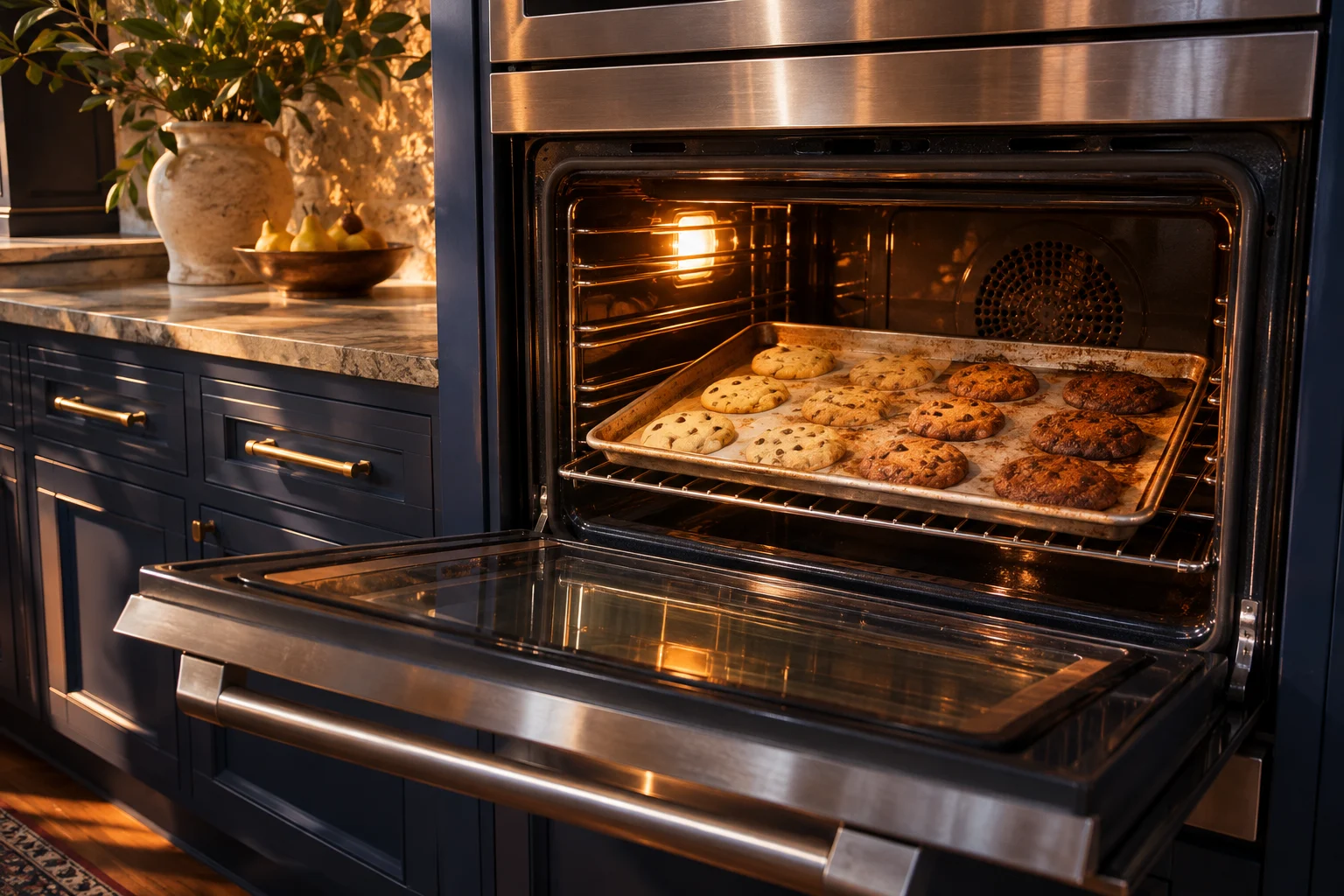
Look at where the difference occurs. A dark bottom, pale top, underdone area at the center, and uneven results between shelves suggest different checks. Record the physical result rather than calling every variation a temperature failure.
Pan material and food depth matter. Thick or dark cookware absorbs and transfers heat differently from a lighter pan. A deeper mixture can need a different preparation from a shallow tray even at the same setting. Use cookware suited to the recipe and oven mode.
Compare a familiar task with the same ingredients, pan, rack, and mode before deciding the appliance changed. Avoid loading extra stored cookware during the test. The aim is a repeatable observation that separates preparation and placement from an operating problem.
Rack choice changes the balance of heat
Moving the food higher or lower changes its relation to active heating surfaces. Follow the recipe and appliance mode instructions for the starting rack. A tall dish places food higher than a shallow tray on the same support.
Check rack seating only with the oven off and cool. Both sides should rest on the intended supports and the rack should move securely. A bent frame or damaged support can tilt a pan, changing food depth and creating a spill risk.
Keep enough room around cookware for the selected mode. Closely packed trays can interrupt heat movement and shade neighboring items. A cavity may physically accept several racks while a particular cooking task needs a more limited arrangement.
Convection is an operating system, not a cure for crowding
A convection fan circulates hot air, and the heating design supplies energy to that flow. The selected mode determines how the system operates. An arrangement that works during conventional baking may need a different approach under convection, according to the recipe and appliance instructions.
The Viking MVDOE6301BG has a convection system with speed choices. The MVDOE6301SS also has that feature. Fan operation should be interpreted in the context of the chosen program instead of assuming a constant sound or speed.
Keep cookware clear of the rear fan area and the intended circulation path. A new mechanical scrape, rough growl, or persistent loss of airflow needs service. Leave the fan cover installed; cleaning through its openings with a tool can damage parts or expose hazards.
| Repeated result | What to check first | When to seek service |
|---|---|---|
| Bottom browns too strongly | Rack height and pan properties | Suitable placement leaves the same abnormal pattern |
| Upper and lower trays differ | Pan spacing and mode instructions | Correct loading still gives poor distribution |
| Food remains pale while heating seems weak | Ready condition and door closure | Oven cannot establish ordinary heat |
| New fan noise accompanies unevenness | Visible load clearance | Noise originates behind a cover |
| Heating stops with a code | Exact message and active mode | Fault persists or indicates unsafe temperature |
Door openings interrupt a useful comparison
Each opening releases hot air and changes the environment around the food. Use the window and display when practical and keep unnecessary checking brief. Repeated opening to reposition a thermometer can make its reading less representative.
A door that does not close normally also loses heat. With the appliance cool, clear a protruding rack or accessory and inspect the gasket visually. Follow the gentle care procedure for the seal and leave damaged hinges or a displaced gasket for assessment.
Keep external ventilation clear. A towel or stored item across an opening can affect heat management around the appliance. If symptoms began after cabinet work, have the installer compare support and clearances with the oven requirements.
Temperature measurement needs a stable method
Use a suitable oven thermometer according to its instructions and the appliance check procedure. Direct contact with a wall, door, or heating surface changes the reading. Oven cycling and instrument response also affect a brief measurement.
Compare the intended cavity and mode on a double oven. Similar-looking compartments can be used differently and may have different operating selections. Avoid treating a reading taken during a specialized mode as a general calibration result.
Calibration is appropriate only for the adjustment described for the controls. It cannot restore a failed element, fan, or sensor circuit. A technician can assess those systems when consistent checking leaves abnormal performance.
Sensor and overheating faults need technical attention
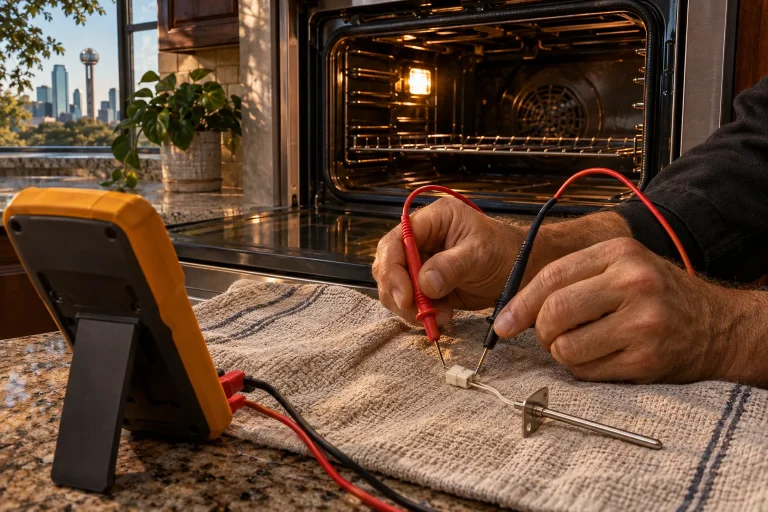
Viking wall oven F3 concerns an open oven sensor or sensor circuit. Service checks the sensor and wiring to determine where the problem lies. Leave resistance testing and control access to the technician.
F2 concerns an oven overtemperature condition. The sensor, wiring, and temperature limiter need assessment. Stop use when overheating is suspected, rather than attempting to improve baking by another setting change.
Smoke, sparks, a burning electrical smell, or repeated breaker trips means the oven stays off. If gas is smelled, leave and contact the gas utility from a safe location. Keep safety devices and covers intact.
Prepare a comparison service can use
- Choose a familiar recipe and suitable pan.
- Set the recommended rack and mode.
- Keep the load clear of circulation paths.
- Check closure and preserve stable cooking conditions.
- Arrange service for a persistent pattern or a fault.
Keep the model, affected cavity, recipe and pan, rack position, convection selection, browning pattern, thermometer method, and displayed code in the same record. Use Viking wall oven repair or contact in Dallas–Fort Worth. Those details help distinguish placement from a fan, heat-source, sensing, or control problem.
Questions
How can rack height affect baking?
Changing height changes the food’s exposure to heat sources and circulating air. Follow the position recommended for the recipe and selected mode.
Should I fill every rack during convection cooking?
Use the load arrangement described for the oven. Pans still need room for airflow, and excessive crowding can shield food from heat.
What does wall oven F3 mean?
Viking F3 concerns an open oven sensor or sensor circuit. A technician should assess resistance and wiring.
What should I do with F2?
F2 concerns an overtemperature condition. Stop use and arrange assessment of the sensor, wiring, and temperature limiter.