On a Viking microwave setup with integrated cooking ventilation, grease and charcoal filters need different care. A washable grease filter catches airborne cooking residue, while a charcoal filter reduces odors in a recirculating arrangement and may require replacement. Start by identifying the appliance’s ventilation design and the filter actually fitted. Use only the approved access and care method, with the appliance off, cool, and safely disconnected before maintenance.
Confirm that the appliance has cooking ventilation
An over-the-range ventilation system captures steam, grease, and odors from the cooking surface below. Other microwave designs may be countertop, drawer, or built-in cooking appliances without that extraction arrangement. A grille on a microwave cabinet may serve appliance cooling instead of acting as a cooking-air filter.
The owner manual identifies the ventilation components and any filter access intended for the owner. Use the appliance label and installation arrangement to find the right procedure. Avoid removing a grille simply because it resembles an access point on a different microwave.
Keep the outer microwave cover installed. High-voltage components inside can remain dangerous after the plug is removed. Filter maintenance should use the access described for ordinary care, with internal blower, wiring, and cooking components left to a technician.
Grease filters catch particles
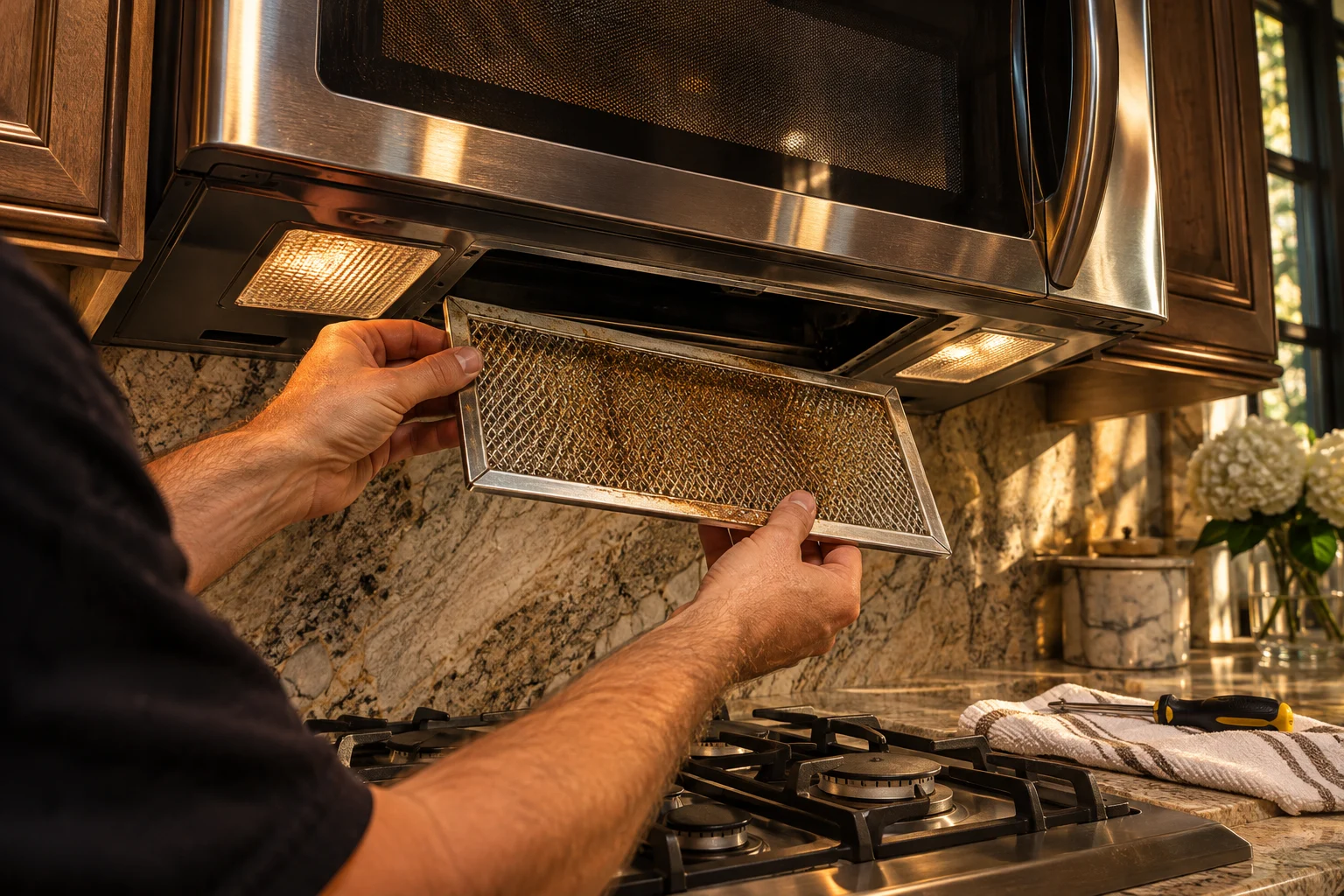
A metal grease filter intercepts droplets and particles carried upward from cooking. Deposits collect in mesh or other capture surfaces. As grease accumulates, airflow can become restricted and the surrounding area can become sticky. Visible film, drips, or reduced extraction are reasons to inspect the filter.
Some grease filters are washable, but the permitted cleaner and washing method depend on the material and construction. The care instructions determine whether hand washing or a dishwasher is allowed. Harsh chemicals or abrasive tools can damage mesh and frames, while rough handling can bend a filter so it no longer seats properly.
Cooking habits affect maintenance needs. Frequent frying or searing can load a filter faster than light cooking. Follow the stated care schedule and inspect more often when deposits build quickly. Avoid waiting until grease drips onto the cooking surface.
Charcoal filters address odors
A recirculating system returns treated air to the room instead of sending all captured air through an outdoor duct. A charcoal element can help reduce cooking odors in that arrangement. It has a different job from the grease filter, and its ability to treat odors changes as it becomes loaded.
Many charcoal filters are replacement items. Washing can damage their structure or leave them ineffective. Use the specified replacement type and interval for the appliance. If a particular filter has a regeneration procedure, follow that procedure precisely instead of applying a generic cleaning method.
Charcoal filtration cannot replace proper airflow or maintenance of the grease filter. A strong odor can also result from residue elsewhere in the ventilation path. Identify the source and check the complete care requirements when odors persist after the intended replacement.
| Component | Primary purpose | Care decision |
|---|---|---|
| Washable grease filter | Capture grease particles | Use the approved washing method |
| Charcoal odor filter | Reduce odors in recirculating air | Check replacement or regeneration instructions |
| Exterior ventilation outlet | Discharge air outdoors where ducted | Check safe visible access for obstruction |
| Internal blower | Move air through the system | Leave internal cleaning and repairs to service |
Safe removal and cleaning sequence
- Turn off the microwave and cooking equipment beneath it.
- Allow hot surfaces to cool and disconnect power safely.
- Clear the work area and support the filter before releasing its retainer.
- Use only the removal method described for the appliance.
- Wash or replace the filter according to its type and refit it securely.
Greasy filters can be slippery. Use a stable position and avoid balancing on furniture or leaning over hot burners. If the retainer will not release normally, arrange help. Forcing an unfamiliar latch can break its mount or drop the filter onto the cooktop.
Keep liquid away from controls, wiring, and ventilation openings that contain electrical components. Wipe reachable greasy surfaces with the permitted cleaner applied to a cloth when appropriate. Let cleaned filter parts dry as directed before reinstalling them.
Refitting matters as much as washing
A filter should sit in its designated position with retainers engaged. A gap can let grease bypass the capture area, and a loose frame can rattle when the fan runs. Check orientation before applying pressure. A bent frame or broken latch needs replacement assessment.
Operate the ventilation system only with its intended filters installed. Running without a grease filter sends more residue toward the blower and duct. A charcoal filter should also match the recirculating arrangement specified by the installation.
After maintenance, use the ordinary ventilation controls and assess whether extraction has improved. Compare similar cooking activity when the appliance is safe to operate. A persistent new rattle, grind, or weak airflow calls for a closer look at the ventilation system.
When cleaning is insufficient
A concealed duct obstruction, stuck damper, unsuitable route, or blower problem can limit airflow after the filter is clean. An installer can assess the route and outlet, while a technician handles internal appliance components. Avoid opening the microwave cabinet to investigate a fan.
Stop use for sparks, smoke, burning odor, a damaged cord, or repeated breaker trips. Leave wet or overheated electrical connections undisturbed and have the supply made safe. A ventilation complaint with electrical symptoms needs professional assessment before further operation.
Viking microwave help in Dallas
Prepare one short record: model, ventilation arrangement, filter type, cleaning or replacement performed, airflow change, noise, and any message. Use the model hub and error-code hub when gathering appliance information.
For continuing problems in Dallas–Fort Worth, use Viking microwave repair or contact. Describe whether the concern is grease capture, odor, airflow, or an abnormal fan sound so the visit can focus on the appropriate system.
Questions
Can I wash a charcoal filter like a metal grease filter?
Many charcoal filters require replacement instead of washing. Follow the care instructions for the filter fitted to the ventilation system.
Does every microwave have ventilation filters?
Filter arrangements depend on the appliance and installation. Confirm that the microwave has an integrated cooking-ventilation system before seeking those filters.
Can I open the microwave cover to reach a filter?
Keep the outer cabinet cover installed. Use only the filter access described for owner maintenance; high-voltage components remain hazardous after unplugging.
Why does airflow remain weak after filter cleaning?
A duct restriction, damper problem, installation issue, or blower fault may remain. Have the complete ventilation path assessed.