A Viking microwave can smell burnt from scorched food, greasy splatter, unsuitable cookware, or arcing at a damaged or dirty cavity surface. An internal electrical fault is another possibility. Stop cooking first, keep the door closed if there is active smoke or flame inside, and disconnect power only when safe; inspect the cooking cavity after everything has cooled.
Stop before trying to clear the odor
A burning smell needs a look at its source before more cooking. Adding time to finish the meal can worsen scorched food or expose a damaged area to more energy. Press the normal stop control, then assess whether there is smoke, visible flame, sparking, or an electrical smell beyond ordinary burnt food.
With active fire or heavy smoke, follow fire-safety action and leave the area when necessary. Keeping the door closed helps avoid feeding an interior flame with fresh air. Avoid reaching inside or handling a hot container while the situation is active. Get appropriate fire-response help when the fire or smoke cannot be managed safely.
If the connection is dry, undamaged, and safely accessible, disconnect the appliance after stopping it. A built-in unit may need isolation at its identified circuit. Leave it in place rather than pulling it from cabinetry to reach hidden wiring. Keep it out of use when the odor is unexplained or damage is visible.
Inspect the cooled cavity and the food container
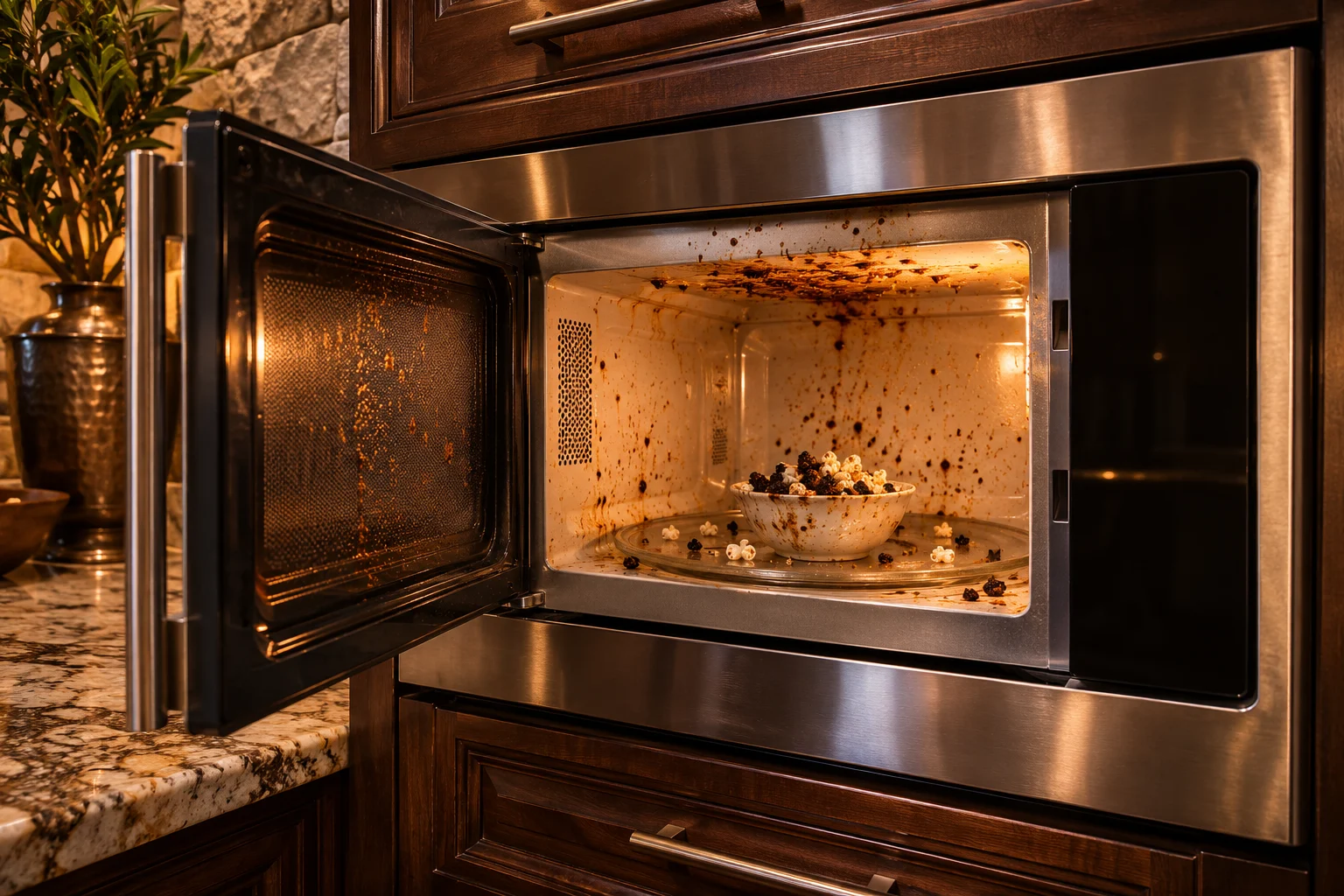
Remove the cooled food and container carefully. Look for dried splatter on the ceiling, walls, door edge, and beneath the turntable if it is removable. Greasy residue can repeatedly heat and release odor even when a fresh meal is cooked correctly. A spill hidden beneath a support can be easy to miss.
- Check for charred food on the container and cavity floor.
- Look for metallic decoration, foil, twist ties, or another unsuitable item.
- Inspect visible surfaces for blackened spots, pitting, or damaged coating.
- Check that a removable turntable and support are seated correctly.
- Keep internal covers, protective panels, and the outer cabinet installed.
The RVM320 has a turntable. Its normal support and rotation arrangement should stay clear of food debris. Clean removable parts only by the prescribed method, and let hot glass cool before washing so a sudden temperature change cannot damage it.
Check the food packaging as well. A container can be safe for storage but unsuitable for microwave heating. Use the packaging directions and the appliance’s cookware instructions. Remove a container with metallic trim or a damaged coating from microwave use.
Clean residue without disturbing protective parts
With power disconnected and the cavity cool, wipe accessible food residue using a soft cloth and a suitable cleaner. Work gently around seams and covers. Strong solvents, abrasive pads, and metal scrapers can damage the cavity finish or leave chemical residue.
Some microwaves have an interior protective cover over the energy-entry area. Grease or charring there deserves careful attention under the owner manual’s cleaning instructions. Leave the cover attached unless the appliance explicitly provides an owner replacement procedure. A burned, cracked, or punctured cover needs assessment before further use.
Rinse cleaner residue from washable surfaces by the approved method and dry the accessible area. Avoid pouring water into ventilation slots, latch openings, or control seams. A cavity that looks cleaner can still have damaged material beneath a charred spot, so recurring odor or sparking requires service.
Arcing leaves a different kind of clue
Arcing can occur when metal or conductive residue creates an unintended electrical path inside the cooking area. A flash, crackle, or small darkened point may accompany it. Suitable cookware and clean surfaces reduce common external causes, but damaged coating or an internal fault can also be involved.
| Finding after cooling | Likely area to consider | Next action |
|---|---|---|
| Charred food with otherwise sound surfaces | Cooking duration or food residue | Clean gently and check cooking directions |
| Metal trim or foil near a darkened spot | Unsuitable material and arcing | Remove the item and assess any cavity damage |
| Burned or cracked interior cover | Protective cover damage | Keep the appliance stopped for service |
| Electrical odor outside the cavity | Wiring or internal component | Disconnect safely and arrange diagnosis |
| Odor returns after correct cleaning | Hidden residue or unresolved damage | Request inspection before more cooking |
Leave scorched areas unmodified until the damage is assessed. Applying household paint or scraping away a finish can create a different problem. A technician can determine whether the cavity, cover, or another component can be repaired appropriately.
Settings can explain food scorching
Check the selected power level, cooking program, and total time used. Small or dry portions may scorch when given the same settings as a larger moist meal. Follow food instructions, stir or turn where directed, and use the program suited to the load.
The RVM320 includes Add-A-Minute, which extends cooking with a button press. Check the displayed time before starting instead of adding time automatically. Its defrost programs use food weight for meat and poultry, making correct program input important for an even result.
A control that behaves unpredictably needs technical attention. A child lock can prevent unwanted operation, but it is not a repair for a control that starts or changes settings unexpectedly. Leave equipment with abnormal operation disconnected when safe.
Internal inspection belongs with a technician
Microwave cabinet removal exposes components that can retain hazardous electrical energy after disconnection. Leave the shell installed, including on a built-in VMOD241. A burnt smell coming from the control area, ventilation outlet, or hidden component needs professional diagnosis.
For a Dallas–Fort Worth request, gather the model, food and container used, selected program, where the odor was strongest, and any smoke, sparks, or visible marks. Send that description through the contact form.
Viking microwave repair can assess recurring odors and damaged parts after safe surface inspection. Keep the microwave stopped when electrical odor, arcing damage, or an uncertain source remains.
Questions
Can I remove the microwave cover to find the smell?
Leave the outer cabinet installed. Internal microwave components can retain hazardous electrical energy even after disconnection.
What features are described for the RVM320?
RVM320 has a turntable and a child safety lock. Its Add-A-Minute control extends cooking, so check the selected time before starting another program.
Should I run the microwave empty to check for a smell?
Keep it stopped while investigating an unexplained burning odor. Any return to operation should follow the operating instructions after the cause has been addressed.