Ice in a Viking ice machine bin can melt faster when warm air enters through a poorly closing door, the surrounding space becomes hotter, or meltwater drains poorly and collects around the ice. Start by checking door closure and visible drainage conditions. Also compare actual ice-making activity with bin loss, since reduced production can make ordinary melting seem much faster.
Separate storage from production
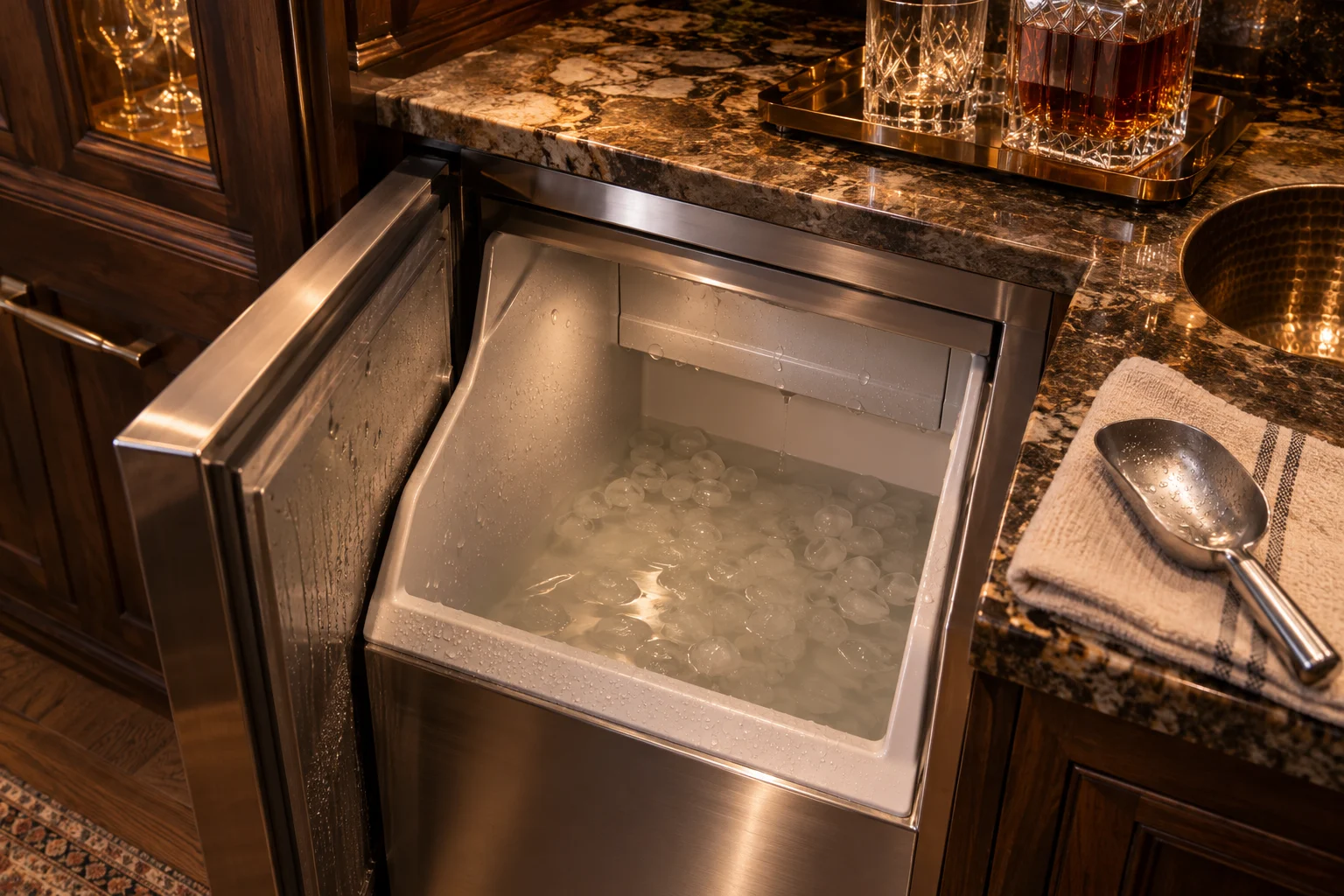
An ice-making appliance forms ice and transfers it to a storage area. On many undercounter designs, that bin is insulated storage rather than a freezer compartment, so gradual melting is expected and meltwater must leave through a drain. Use the owner manual to confirm how your machine stores ice and handles that water.
The useful comparison is a change from the appliance’s usual pattern. Consider whether the bin empties sooner under similar use, whether ice arrives less often, or whether wet ice sits in standing water. A household using more ice can notice a lower level even when the machine itself has not changed.
A smaller supply can also make melting more visible. Watch normal status information from outside the machine instead of reaching into the production mechanism. A technician can investigate production and storage conditions together when the bin no longer keeps up with ordinary use.
Door closure limits heat entering the bin
An open or misaligned door allows warm room air into the storage area. A piece of ice, a misplaced scoop, or a container near the edge can prevent complete closure. Remove any obstruction and confirm that the door rests naturally against its sealing surface.
Clean sticky residue from the accessible gasket and its contact surface, then dry them. Inspect the corners for a folded, torn, or pulled-away section. Look for uneven contact instead of assuming the door is closed because its front appears nearly flush.
The FGIM5151 has a self-closing door. That feature still needs a clear closing path. If the door repeatedly stops short or sits crooked, have the hinges, alignment, and sealing fit evaluated. Extra force against an obstruction can damage the mechanism.
What bin insulation can and cannot do
Insulation slows heat transfer from the room to the ice. It works together with the closed door and sound cabinet surfaces. A cracked liner, damaged panel, or persistent gap can allow more heat to reach the stored ice.
Inspect visible surfaces for damage without removing the bin liner or cabinet panels. Moisture on an unusual exterior area or a newly warm spot is useful service context, particularly if it appeared after installation work or an impact. Leave concealed insulation and cabinet construction for professional assessment.
| Observation | Possible contributing condition | Safe next check |
|---|---|---|
| Ice loss follows frequent access | Warm air repeatedly entering the bin | Close the door promptly and clear its path |
| Ice sits in pooled water | Restricted meltwater route | Inspect accessible drainage without dismantling |
| Cabinet area has become hotter | More heat entering storage or reduced heat release | Clear ventilation and consider nearby heat sources |
| Little new ice enters the bin | Reduced production alongside ordinary melt | Use status information and arrange diagnosis if persistent |
Meltwater needs a clear route out
Water around the stored ice changes how it sits and clumps. A slow drain can leave the bin wet and create a misleading impression that every cube is melting unusually quickly. Look for water collecting at the bottom and any accessible hose section that has been pinched or bent.
A machine with a drain pump also needs that system to move water onward. The FCIU515D includes a factory-installed drain pump, and the FPIM5151 also includes one. Use the installed model’s drain arrangement when describing the symptom.
Keep the machine off and power disconnected before permitted cleaning near electrical or moving parts. Remove loose accessible debris only by the prescribed method. Avoid putting sharp tools, chemicals, or an improvised flushing setup into a concealed drain. Persistent pooling, leakage, or a pump that seems unable to clear water requires service.
Ambient heat changes the balance
A warmer room transfers more heat toward the bin and gives the appliance more heat to release during production. If the machine sits near cooking equipment or receives direct sun, consider whether the surrounding conditions changed when the melting became noticeable.
Keep ventilation openings clear of bags, towels, dust buildup, and stored objects. Check the required installation clearances through the appliance instructions. A built-in position should allow the intended airflow so the unit can release heat into the room.
Leave the cooling-system components and internal fan area intact. A technician can evaluate whether poor heat release or a refrigeration problem is reducing new ice production. Repeated control changes will not correct an obstructed ventilation path.
Safe observations before arranging help
- Check the door for a scoop, ice fragment, or other obstruction.
- Clean accessible seal contact areas and inspect visible damage.
- Look for pooled water and visible hose crushing.
- Keep the surrounding ventilation route open.
- Stop use for smoke, sparking, or water near electrical parts.
Use the model hub and error-code hub when identifying the appliance and its displays. For the FPNI515, water and cleaning alerts are documented on its LED controls. Follow a maintenance prompt through that machine’s procedure rather than dismissing it as part of normal ice use.
Ice-machine service in Dallas
Request Viking undercounter ice-machine repair in Dallas–Fort Worth when the change persists. Note the model, door condition, room changes, pooled water, production behavior, and maintenance alert together. Clear the approach for inspection so the technician can assess insulation, drainage, heat exposure, and production before proposing work.
Questions
Does FCIU515D include a drain pump?
Yes. Its drain pump is installed at the factory, and the unit supports built-in or freestanding installation.
Does FGIM5151 have a self-closing door?
Yes. That feature is documented along with an interior bin light and a Time to Clean alert.
What does FPNI515 include for maintenance?
Its LED controls provide water and cleaning alerts. It also includes a drain pump.