A Viking gas burner can click without lighting when its cap is misaligned, cleaning moisture affects the ignition area, burner ports are obstructed, or the igniter or gas supply needs repair. Turn the burner off before checking anything and let the parts cool. Start with dry, correctly seated removable burner pieces. If gas is smelled, leave the area and call the gas utility from a safe place instead of continuing the checks.
Stop repeated ignition attempts
Clicking indicates an attempt to create ignition, while a stable flame is the intended result. Repeated attempts with no flame can leave gas entering without normal combustion. Turn the control off and follow the appliance’s operating instructions before any further use.
A gas odor takes priority over diagnosing the sound. Leave, keep away from ignition sources, and contact the gas utility from a safe location. Avoid switches, flames, and using the cooktop to test whether the smell changes.
Keep children away from the equipment while the burner is unreliable. A hot pan or grate can remain hazardous after the control is off. Allow the cooking area to cool before approaching removable parts.
Cap alignment controls the path to ignition
The burner cap helps distribute gas toward its intended ports. A tilted cap, one fitted to the wrong position, or debris beneath it can alter how gas reaches the spark. Flame may fail to spread around the burner or fail to establish at all.
With the appliance off and cool, inspect removable parts without disturbing gas connections. Refit the cap in its designed position so it sits securely. Keep similar-looking caps with their original burners during cleaning, and use the owner manual if their positions have been mixed.
Leave a warped cap, cracked head, or damaged seating area for assessment. Forcing a part flat or bending it changes the burner arrangement. A correct fit is more important than making it appear level by pressure.
Wet burners need the proper drying step
Water from a spill or recent cleaning can affect the ignition path. Moisture near an electrode can allow the spark to take an unintended route, while wet burner passages can interfere with normal gas movement. Turn the appliance off and dry removable parts by their care procedure.
Keep liquid out of the igniter opening, controls, and concealed spaces. Use a cloth rather than flooding a burner area with cleaner. Let parts dry fully before reassembly, and avoid an open flame or concentrated heat source as an improvised drying method.
Cleaning residue can also remain around ports. Remove reachable deposits using the tool and method permitted for the burner. Avoid enlarging a port or scraping the electrode, because the original shape and spacing matter to safe ignition.
| What changed | Possible contributor | Safe response |
|---|---|---|
| Problem began after caps were removed | Incorrect seating or mixed parts | Check cool burner assembly against its care procedure |
| Problem followed a wet cleanup | Moisture near ignition parts | Turn off and dry permitted components |
| Debris blocks visible ports | Restricted gas path | Clean without changing port size |
| Spark appears away from its intended area | Electrode, contamination, or insulation problem | Leave ignition diagnosis to service |
| Several burners stop lighting together | Shared supply or ignition concern | Arrange professional assessment |
The igniter needs more than an audible click
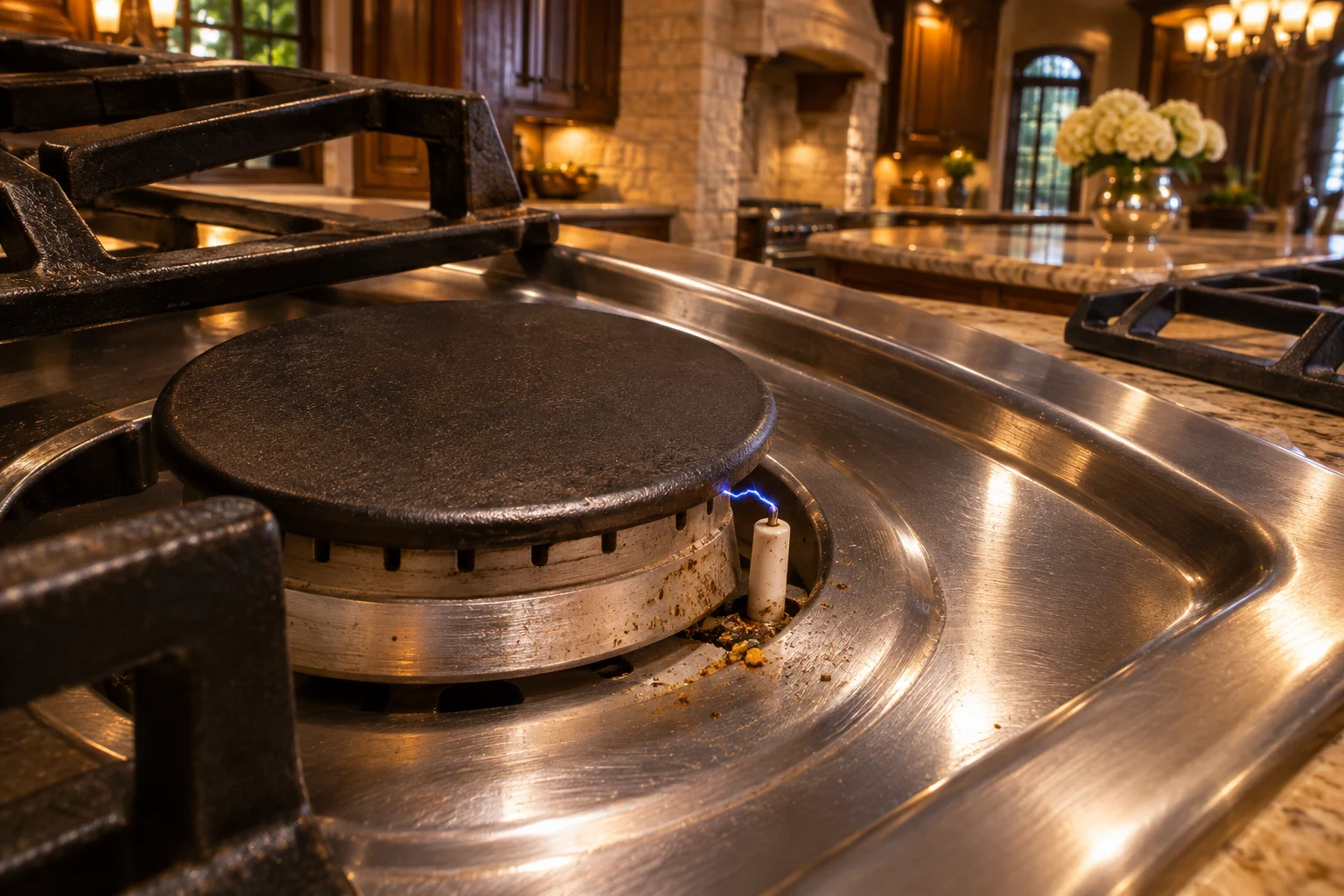
An electrode creates a spark at the intended burner location. Damage, contamination, a cracked insulator, or a poor connection can affect that process. A clicking sound may still be heard when the spark is not reaching the gas correctly.
Inspect only what is visible with the appliance off and cool. Leave electrode adjustment, ignition wiring, and module tests to a technician. Small changes in position can affect ignition, so avoid bending an electrode to bring it closer to the burner.
The Viking RVGC3301 has SureSpark electronic ignition and automatic reignition. Those features still need a sound burner assembly and correct operating conditions. A continuing ignition complaint deserves assessment of the complete system rather than replacement based on sound alone.
Gas supply work is professional work
If the problem began after installation, a move, or gas work, tell the installer what changed. A connector, valve, regulator, or fuel configuration may need checking. Avoid pulling the cooktop or rangetop out to inspect hidden tubing.
Look only at safely visible conditions. Leave leak testing, pressure measurement, valve adjustment, and conversion work to a professional. Never use an open flame to search for a leak. A kinked or damaged connector needs correction using the proper installation procedure.
The Viking VGRT362 specifies an electrical supply as part of its installation. Gas cooking can therefore involve both fuel and electrical connections. A technician should assess the relevant system when clicking and burner behavior change.
Keep the troubleshooting sequence simple
- Turn the burner off when ignition fails.
- Respond to gas odor by leaving and contacting the gas utility safely.
- Let the burner cool before checking removable caps.
- Clean and dry permitted parts without damaging ports or the igniter.
- Arrange service if normal ignition does not return.
Stop use for smoke, sparks outside the intended ignition area, a burning electrical smell, or repeated breaker trips. Keep protective devices intact and leave internal covers installed. A damaged control or gas connection should remain out of use until assessed.
Viking gas cooking help in Dallas
Prepare one record: model, affected burner, recent spill or cleaning, cap position, whether other burners work, unusual odor, and checks completed. Use Viking cooktop and rangetop repair or contact in Dallas–Fort Worth. That pattern helps service distinguish burner care, ignition components, and a shared supply problem.
Questions
What should I do if I smell gas?
Leave the area and contact the gas utility from a safe place. Avoid switches, flames, and further lighting attempts.
Why did clicking trouble begin after cleaning?
Moisture or incorrectly seated burner parts can interfere with ignition. Turn the burner off, let it cool, and dry and refit removable parts as directed.
Does a clicking sound prove the igniter works correctly?
The spark still needs to occur in the intended location and ignite the gas. A damaged electrode, connection, or burner condition can require diagnosis.
Can I adjust the gas valve to make it light?
Leave gas-valve, regulator, and internal ignition adjustments to a professional. Owner care is limited to accessible parts described for cleaning and refitting.